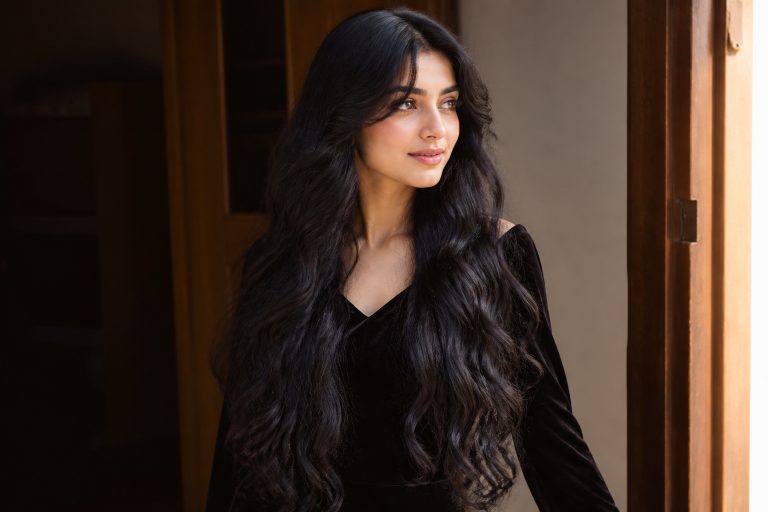





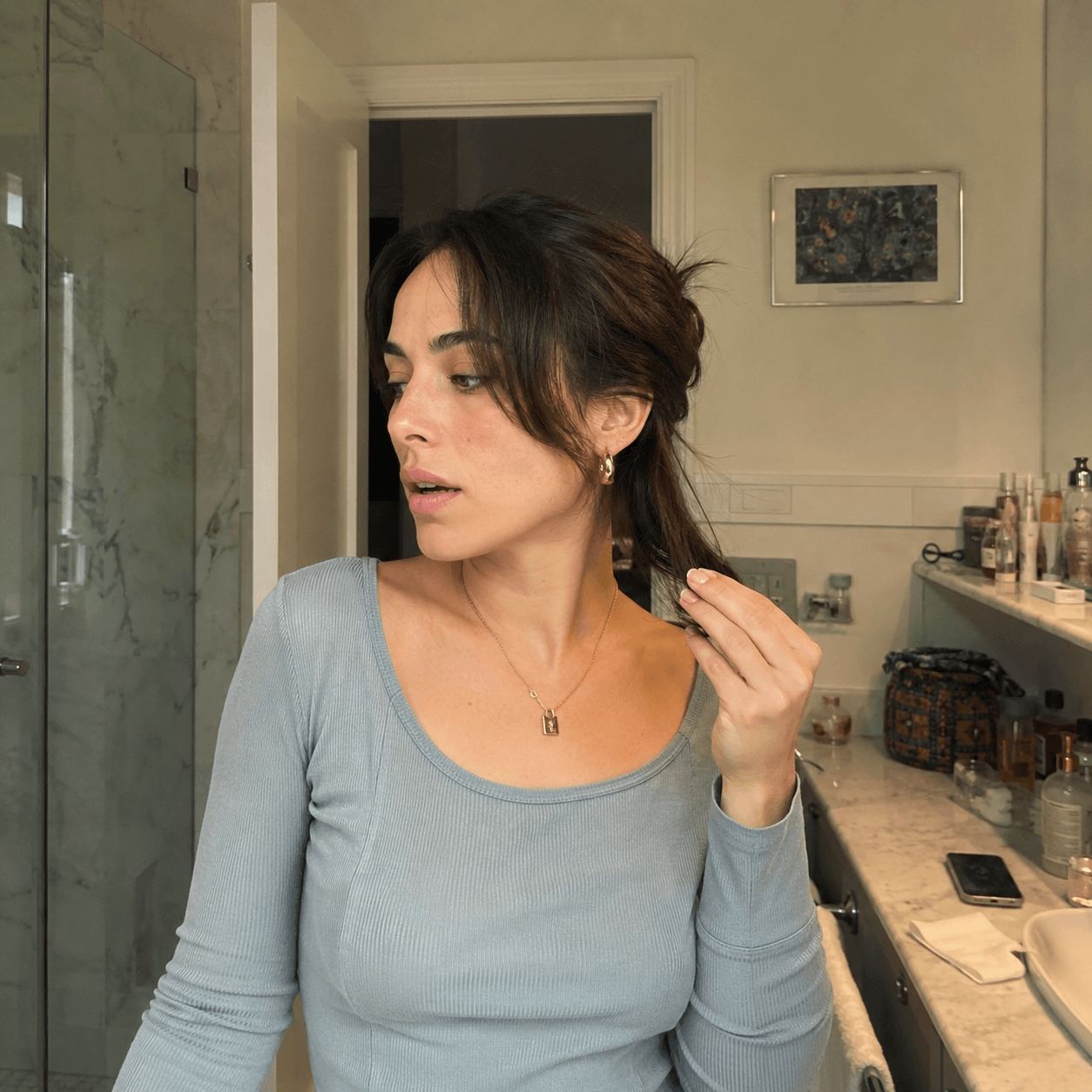


My first short cut that actually fooled people into thinking I had more hair was a lob with soft waves. Short hairstyles for fine hair are the theme here, and I tried every trick on this list to go from flat ponytail to genuinely bouncy. Below are 13 realistic, style-by-style ideas that work for different textures and face shapes, with tips I learned the hard way.
Two quick notes. These looks run from collarbone-length to pixie crops, most need 5 to 15 minutes in the morning, and the current trend favors blunt edges plus lived-in texture. Pick the silhouette that keeps weight at the ends if your hair thins when it gets long.
13 Short Hairstyles for Fine Hair That Look Twice as Full
Wavy Lob That Adds Weight at the Ends


Best for fine to medium hair. Grows out softly. About 8 to 12 minutes each morning.
This is the safest short hairstyle for fine hair if you want fullness without committing to a dramatic chop. The waves start below the ear so the mid-lengths keep movement and the ends read denser. I ask my stylist for soft face-framing layers and a bluntish perimeter so the lob does not look wispy. The trick is a 1.25-inch curling wand turned away from your face, then rough-texture spray to break the curl into volume. Heavy oils will flatten this within an hour; I learned that the expensive argan oil was a mistake for my hair.
Side-Swept Sixties Bob for Instant Root Lift
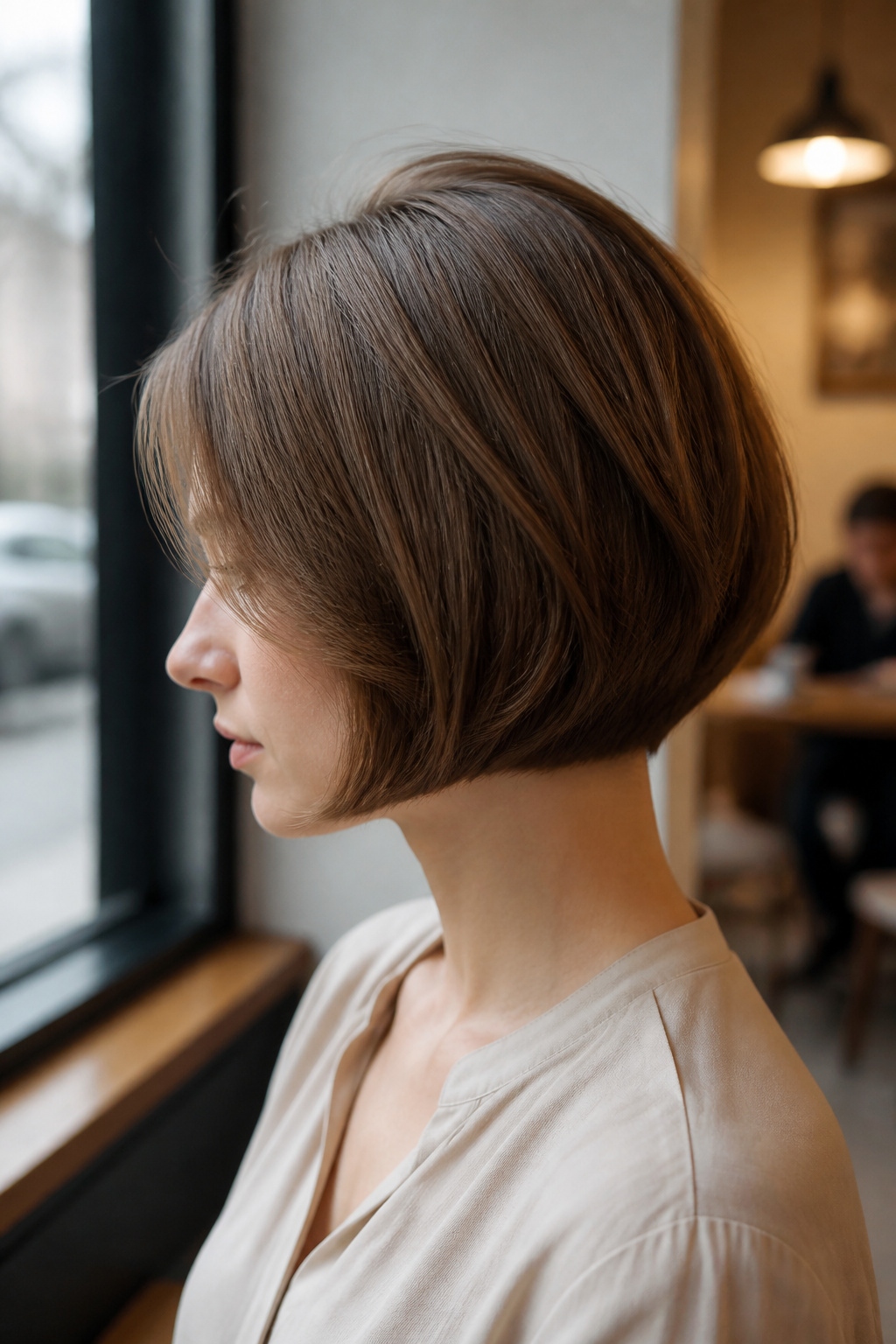

Best for fine hair needing crown volume. Trim every 8 to 10 weeks. About 5 to 10 minutes daily.
A deep side part is the main secret here. The sixties bob is pushed off-center so the crown looks higher and the diagonal line creates instant density on one side. Ask for a rounded perimeter with a slightly heavier front piece to keep weight close to the face. To style, rough-dry roots with a lightweight volumizing mousse and smooth the ends with a round brush. Warning: if you over-layer the interior, the retro lift collapses into a flimsy shape.
Subtle Graduated Bob That Keeps Shape Longer
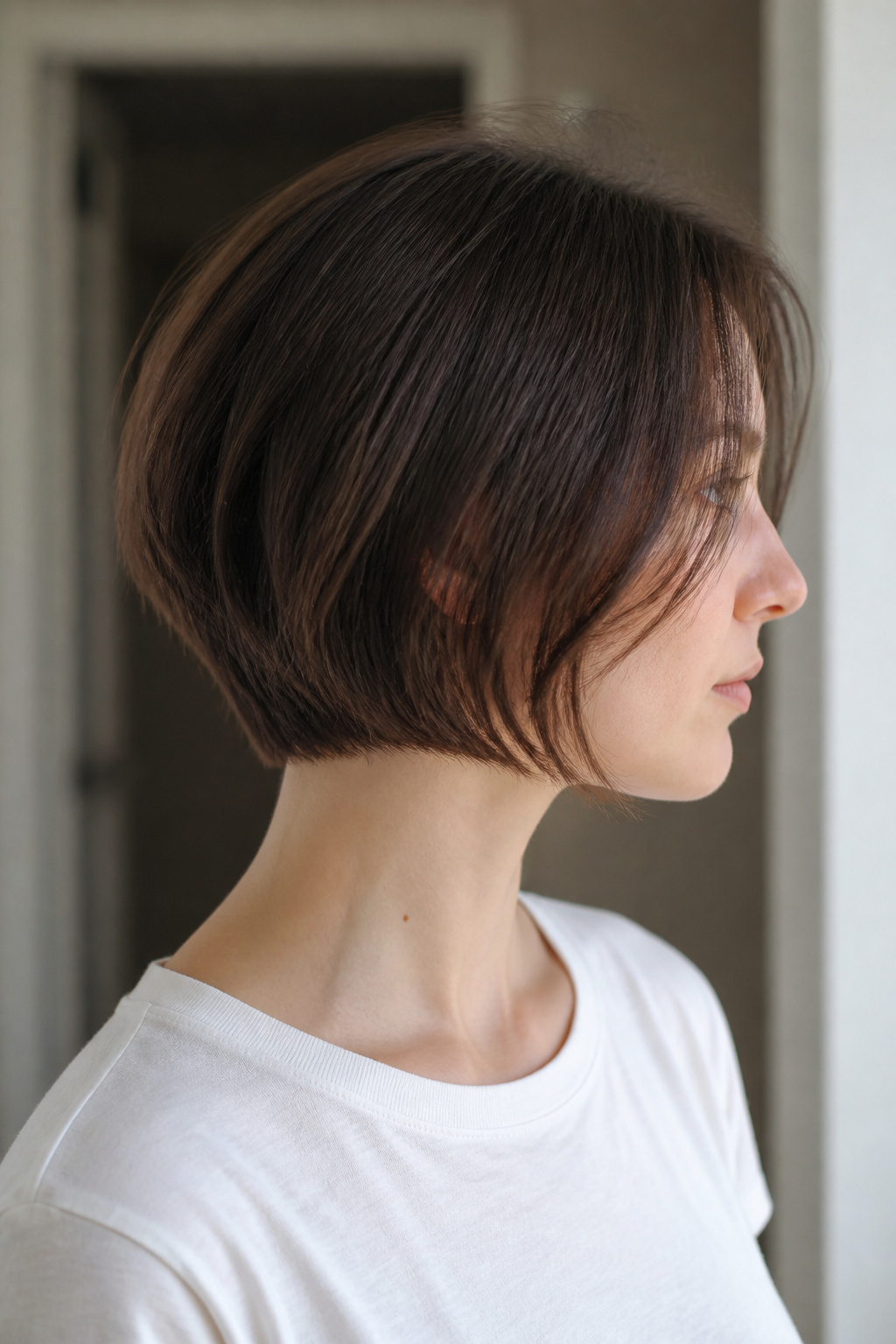

Best for straight fine hair. Grows out gracefully. About 6 to 9 minutes each morning.
The gentle angle of a graduated bob builds natural volume in the back without creating a hard line. I had one that grew into a flattering shoulder-skimming shape, which meant fewer panic trims. Ask your stylist for subtle stacking rather than a sharp geometric line. A common mistake is asking for too many face-framing layers; that thins the silhouette. Keep the interior light and let the weight at the ends do the work.
Tucked Short Bob for a Fuller Silhouette


Best for fine or thin hair. Easy daily styling. About 3 to 6 minutes each morning.
Tucking hair behind the ear is a styling trick, not a haircut. It compresses the perimeter so the silhouette reads thicker. I stole this from my stylist the week after a blunt bob and lived in it for months. To pull it off, keep enough length to sit cleanly behind the ear and avoid too many layers near the face. If your ears feel exposed, a little texture spray behind the ear keeps the tuck looking intentional rather than desperate.
Blunt Bob That Preserves Density
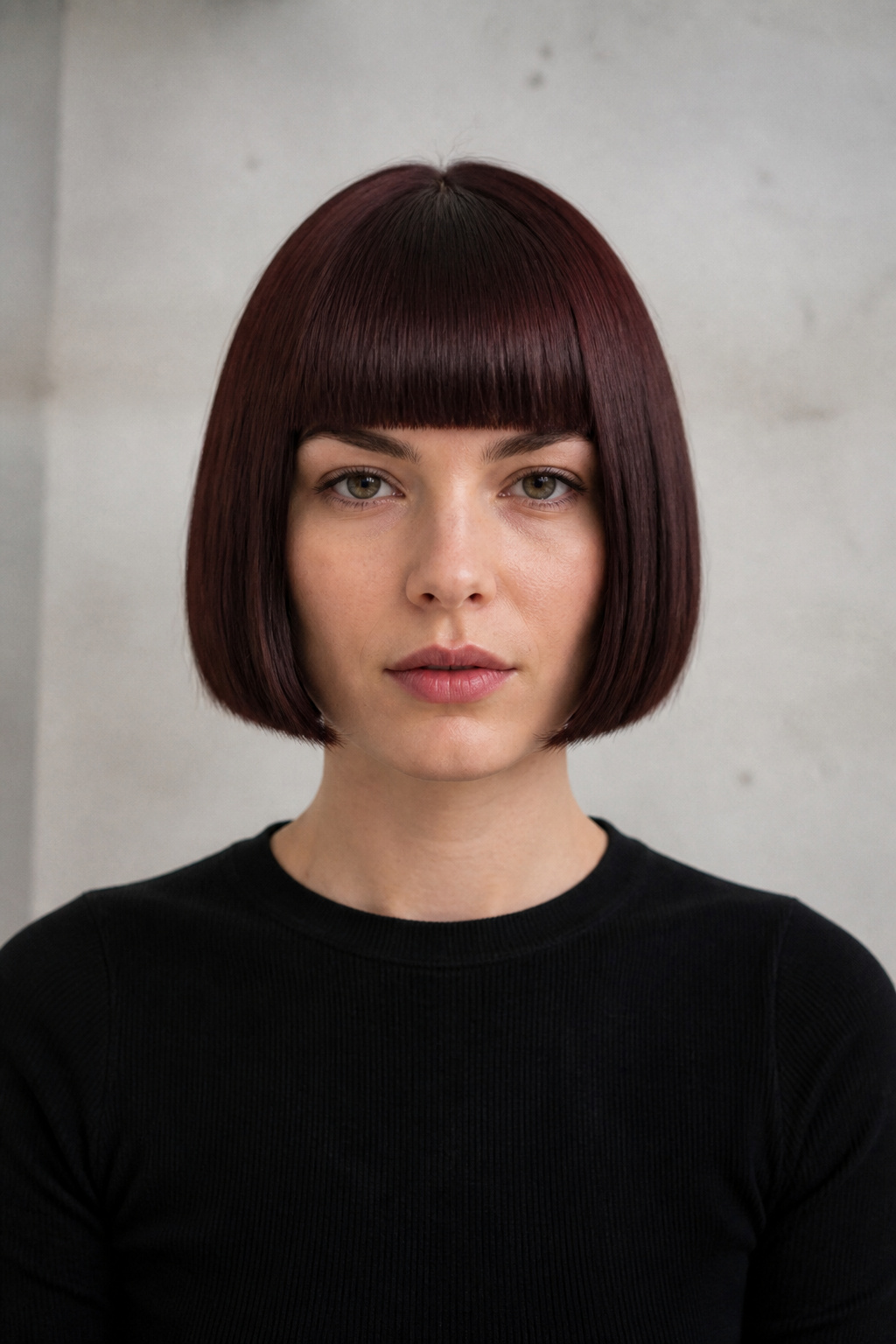

Best for fine to medium hair. Trim every 8 to 10 weeks. About 6 to 10 minutes daily.
A floating blunt perimeter is the clearest way to make fine hair look fuller because the blunt edge reads like actual thickness. My stylist warned me that blunt lines need upkeep, and that was true: when the line softens, so does the illusion of volume. Avoid unnecessary interior thinning. If you want texture, add it only at the ends instead of through the body.
Rounded French Bob with Tousled Ends


Best for fine hair wanting a Parisian look. Low daily upkeep. About 5 minutes each morning.
Evenly chopped ends plus a slightly tousled finish create body with minimal effort. I tried a very sharp minute-long blowout for this and regretted it; the charm comes from the relaxed finish. A few spritzes of texture spray and scrunching with fingers is all you need. If your stylist uses too much layering, the rounded silhouette disappears.
Face-Framing Pixie That Widens the Upper Face
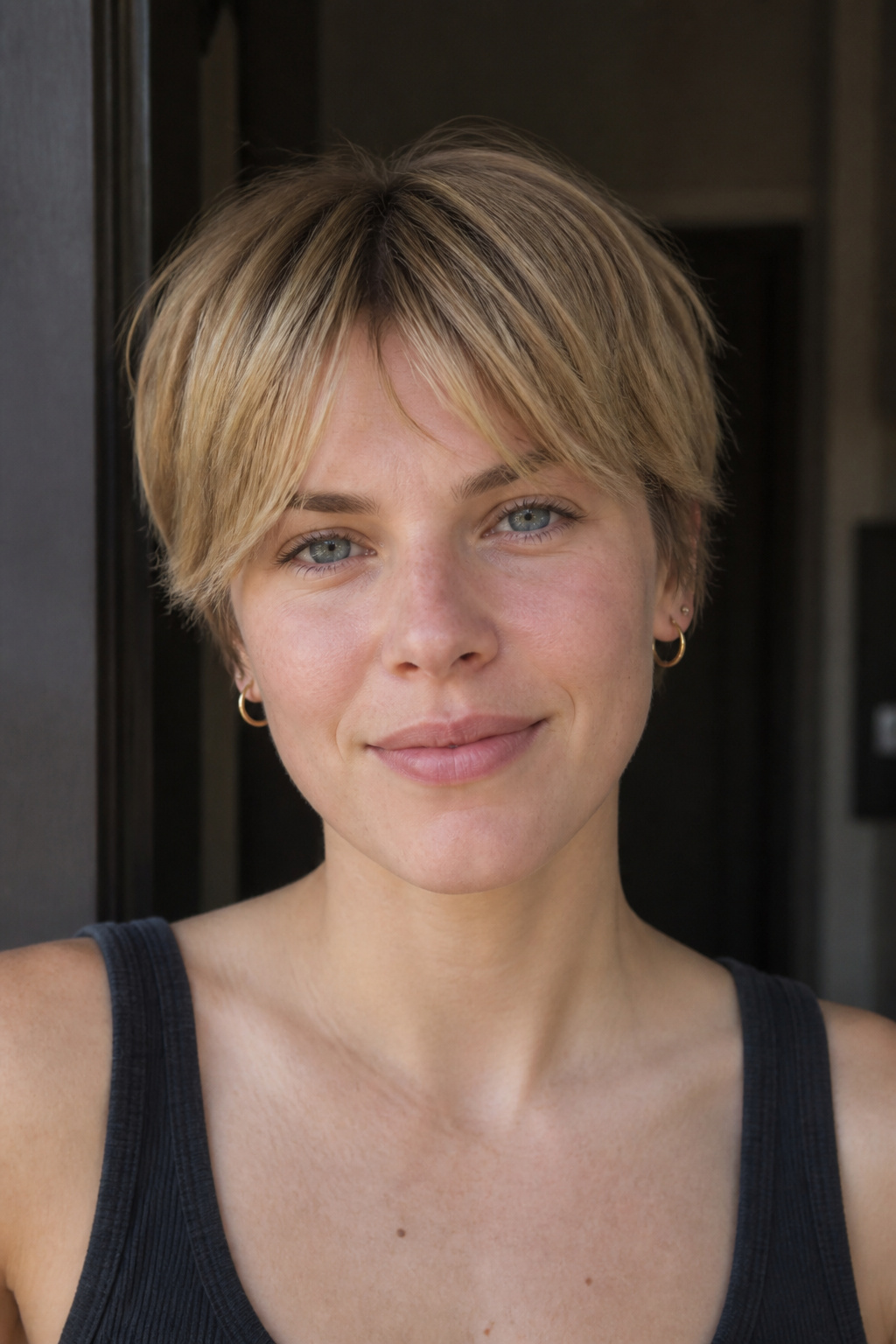

Best for fine hair that needs width at the face. Trim every 6 to 8 weeks. Styling about 3 to 5 minutes.
A fringe and forward-facing pieces trick the eye into thinking there is more hair around the face. I was scared to chop my sides, but the face-framing pixie added surprising density without bulk. Ask for a softer fringe that can sweep to the side. The single mistake people make is going micro-bang; on fine hair they can look sparse fast.
Layered Pixie for Crown Lift
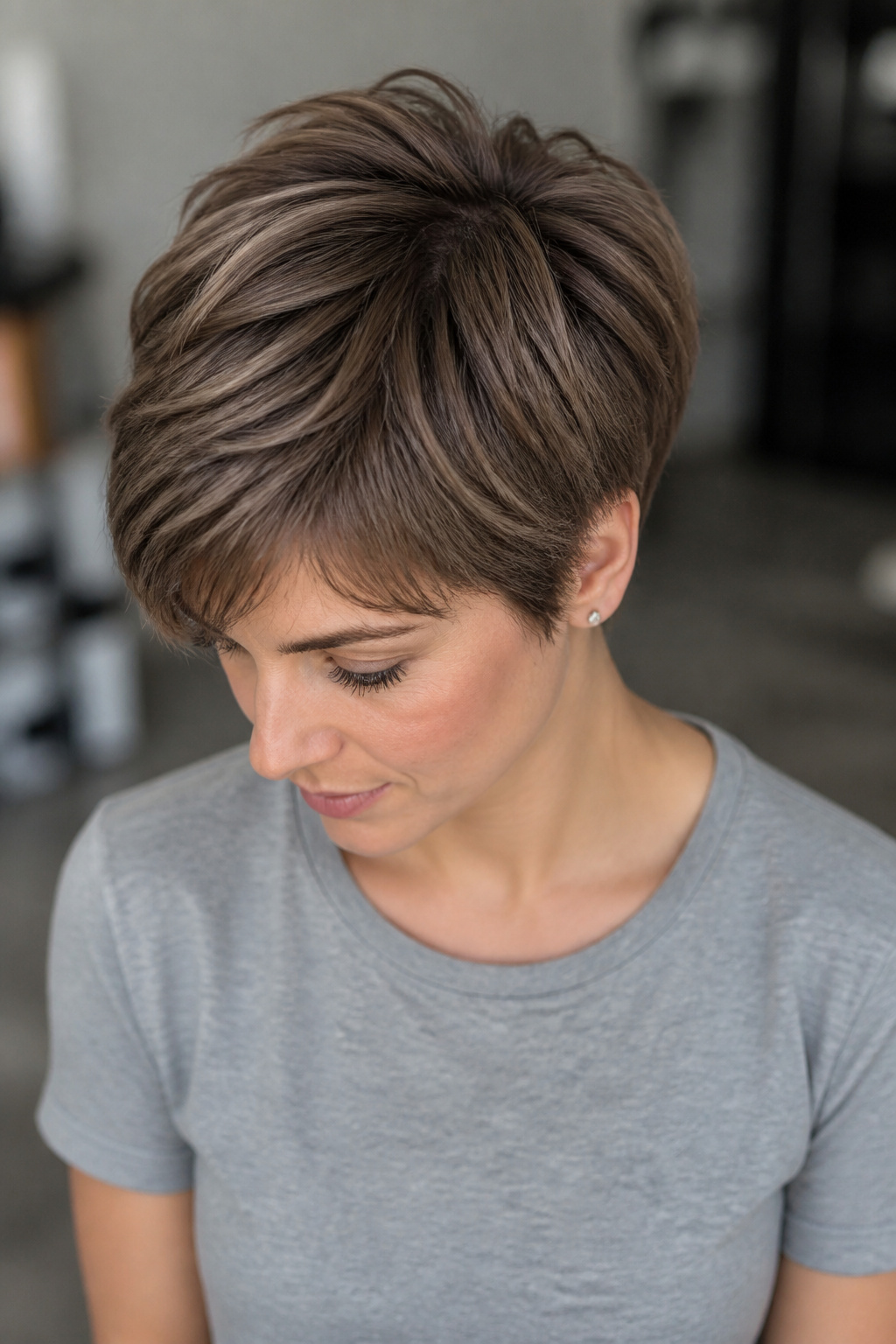

Best for short fine hair that needs height. Trim every 6 weeks. About 4 to 8 minutes to style.
This cut is all about built-in structure. My stylist carved in soft internal layers to elevate the crown; a lightweight volumizing mousse and a quick blow-dry with a round brush finished the look. If the layers are too heavy, the lift vanishes. Use a soft-hold hairspray only at the roots to keep movement.
Short Bob with Soft Waves for Natural Body


Best for fine wavy or straight hair. Improves on day two. About 7 to 12 minutes each morning.
Movement is your friend here. A short bob with loose, lived-in waves reads fuller because the bends catch light and shadow. The technique I use is wrapping 1-inch sections around a 1-inch ceramic wand, leaving the very ends out. Finish with a texture spray to avoid over-polished curls. The trap is trying to make every wave uniform; that looks fake on fine hair.
Graduated Bob with Stacked Back for Natural Volume
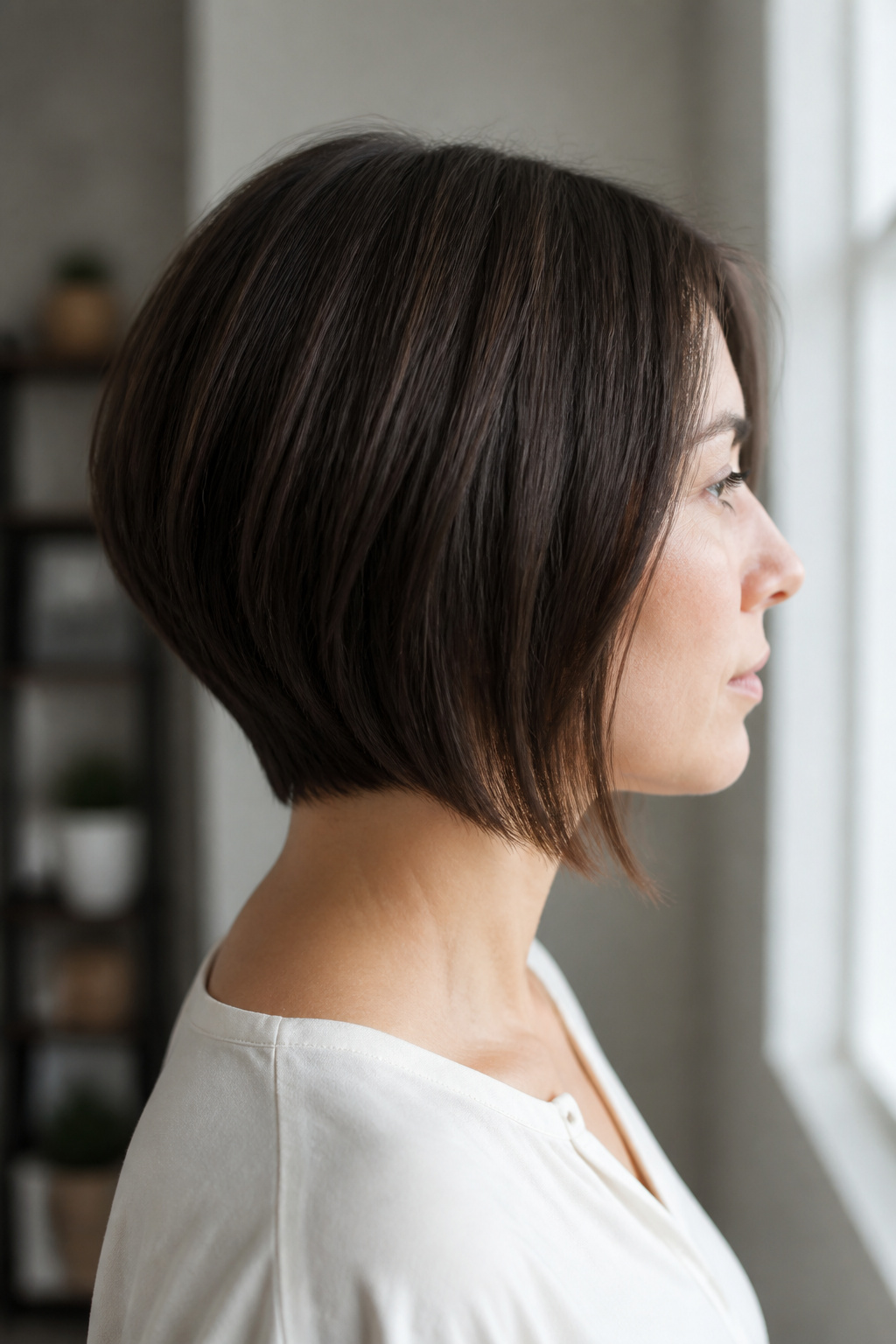

Best for straight fine hair needing built-in lift. Trim every 8 to 10 weeks. About 6 minutes daily.
Stacking the back gives a fuller rear profile while keeping a sleek front. My hairdresser used subtle graduation rather than a dramatic stack so it would not look forced. For styling, blow-dry roots first then use a round brush on the back to accentuate the stack. Do not over-thin the back; that kills the volume.
Textured Shag Pixie for Airy Density
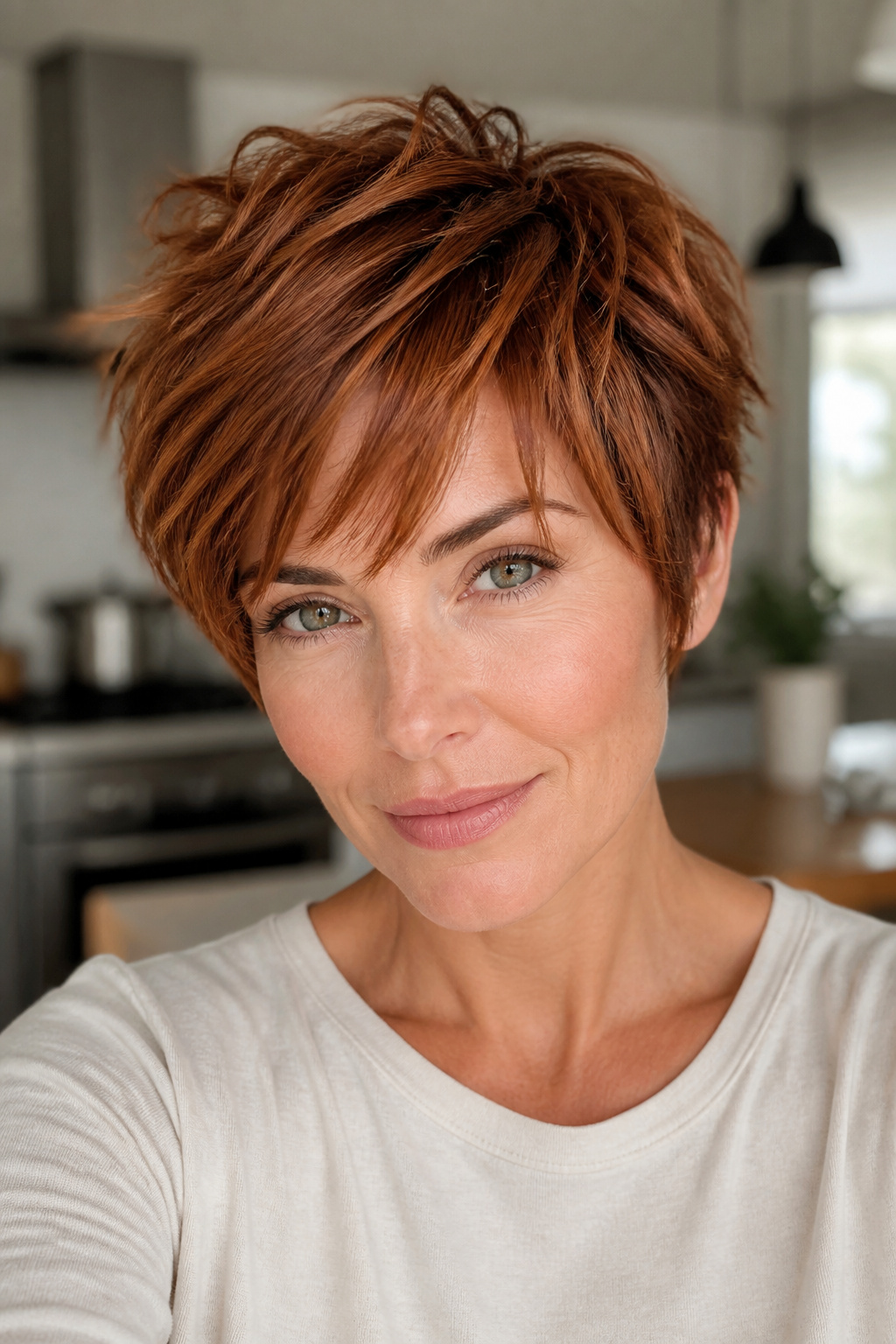

Best for wavy or curly fine hair. Grows out messily in a useful way. About 4 to 7 minutes to shape.
Shaggy texture gives the impression of density because hair is separated into many visible pieces. I used a light texture spray and finger-styled to define pieces, which looked fuller than any heavy mousse. The honest downside: it can look unkempt if you go too heavy on powder or paste.
Side-Swept Crop That Elongates Round Faces
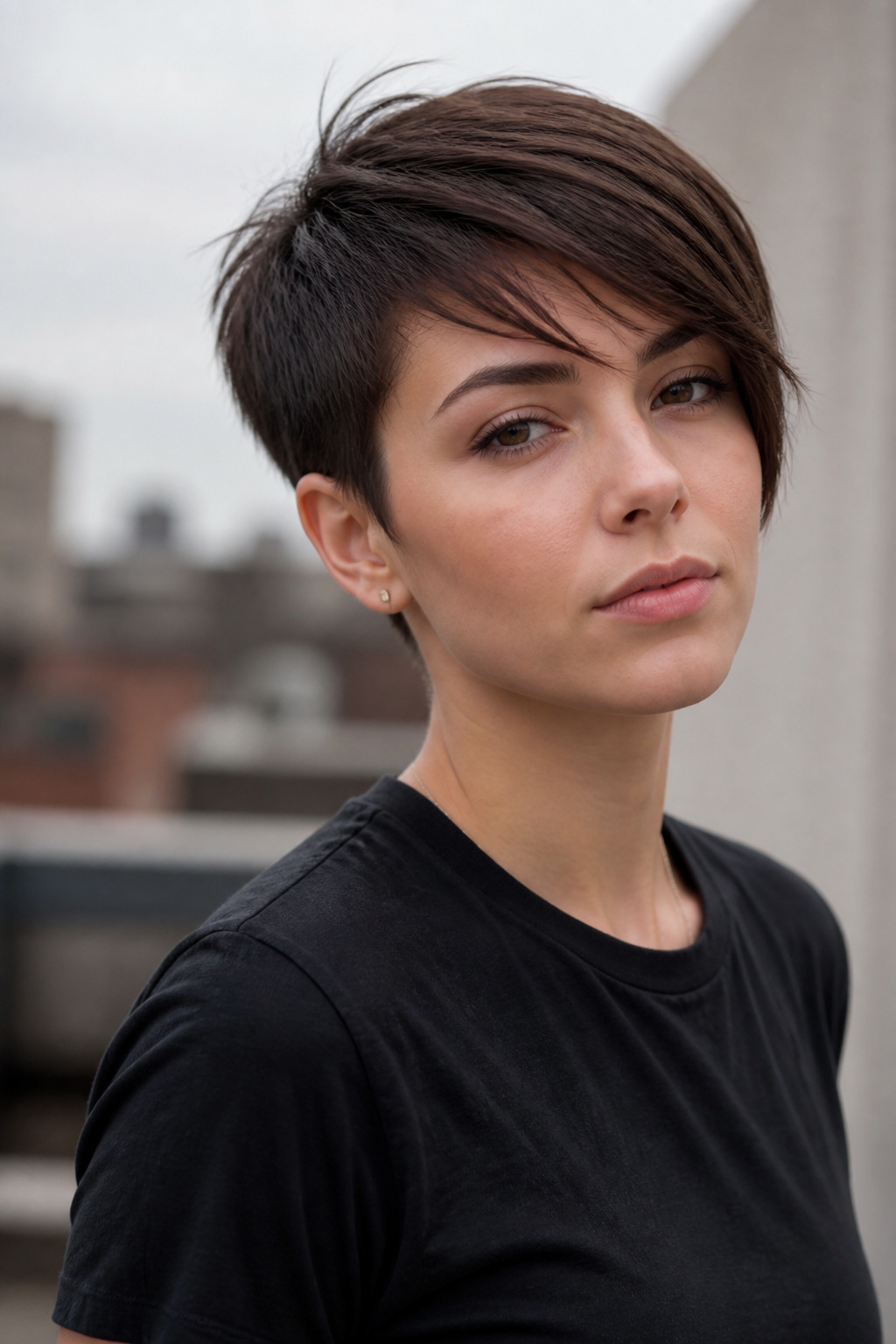

Best for round faces and fine hair needing front fullness. Trim every 6 to 8 weeks. About 3 to 6 minutes each morning.
A longer sweep across the forehead adds front volume and can visually lengthen a round face. I learned to avoid going too heavy on product; a touch of texture spray and a comb across the sweep is enough. If you make the sweep too flat against the head, you lose the fullness effect.
Tapered Pixie That Keeps the Crown Visible
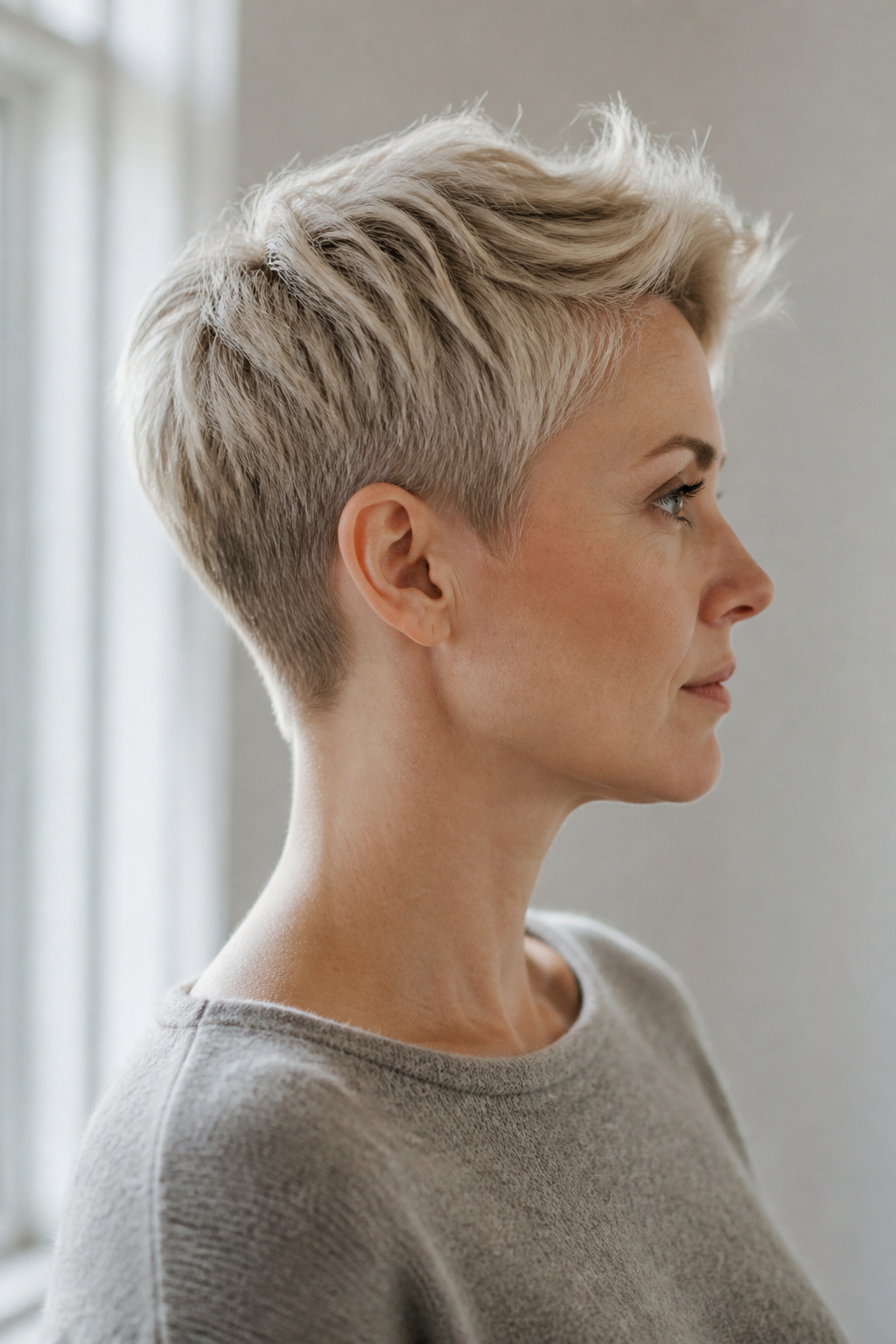

Best for fine straight hair wanting lift without bulk. Trim every 6 weeks. About 5 minutes to style.
Tapered sides keep the silhouette clean while the slightly longer top gives you lift. I used a root-lifting mousse and a quick upside-down blow-dry to maximize height. The common error is over-texturizing the top with thick pomades; use lightweight products only.
What You'll Need to Get This Look
Heat Tools
- 1.25-inch ceramic curling wand ($35 to $60) great for loose lob waves.
- 1-inch titanium flat iron ($40 to $80) for smoothing blunt bobs.
- Lightweight hair dryer with diffuser ($40 to $120) for root lift and quick dries.
- 1.5-inch round nylon brush ($12 to $25) for shaping stacks and curls.
Styling Products
- Alcohol-free volumizing mousse, 8oz ($10 to $25) for damp-root lift.
- Sea salt texture spray, 5oz ($8 to $20) to create lived-in waves.
- Soft-hold flexible hairspray, 8oz ($8 to $20) to finish without stiffness.
Hair Care and Protection
- Lightweight heat protectant spray, 6oz ($8 to $20) protects fine hair from tools.
- Gentle sulfate-free shampoo, 12oz ($8 to $25) preserves color and body.
Accessories and Finishing
- Dry shampoo for fine hair, 4oz ($6 to $18) for day-two volume.
- Fine-tooth tail comb ($5 to $12) for precise parts.
Budget Swaps
- Drugstore volumizing mousse, 8oz ($6 to $12) works well in a pinch.
- Affordable ceramic curling wand, 1-inch ($20 to $35) if you do only occasional waves.
- Budget hair dryer with diffuser ($25 to $45) for simpler routines.
Shopping Tips for These Looks
Buy tools during holiday sales: Blowout tools drop 20 to 30 percent in November, so wait if you can and get a better dryer for the same money. I waited and saved on my current dryer with a diffuser.
Link: Lightweight hair dryer with diffuser
Pick mousse over heavy creams: Lightweight volumizing mousse lifts roots without weighing hair down. I switched from a thick cream and the difference was immediate.
Link: Alcohol-free volumizing mousse, 8oz
Learn one heat tool well: Investing time in one wand size covers most short styles. I use a 1.25-inch for everything from soft waves to piece-y pixie texture.
Link: 1.25-inch ceramic curling wand
Use dry shampoo strategically: Spray at the roots and massage with your fingertips for instant lift on day two rather than piling on product.
Link: Dry shampoo for fine hair, 4oz
Frequently Asked Questions
Will a blunt bob make my fine hair look thicker?
Yes, a blunt bob preserves weight at the ends, which reads as density. Keep the interior light and schedule trims every 8 to 10 weeks for the sharpest effect.
What product actually helps root lift without residue?
A lightweight mousse applied to damp roots before blow-drying gives the best lift. Try a gentle alcohol-free formula for less flaking.
Link: Alcohol-free volumizing mousse, 8oz
How do I make short hairstyles work on curly fine hair?
Choose a shaggy pixie or a layered bob to celebrate texture. Use a light curl cream and a diffuser on low heat to encourage natural bounce.
Link: Lightweight heat protectant spray, 6oz
How often should I trim a pixie to keep the shape?
Short crops like pixies generally need trimming every 4 to 8 weeks depending on how quickly your hair grows and how sharp you want the lines.
Final Thoughts
Where to Start
If you want one small change that reads fuller, ask for a blunt perimeter with soft face-framing layers and try a lightweight mousse on damp roots. Which of these short hairstyles for fine hair feels most like you — a polished bob or a messy pixie? Tell me what you’re thinking and I’ll share a quick routine for your pick.