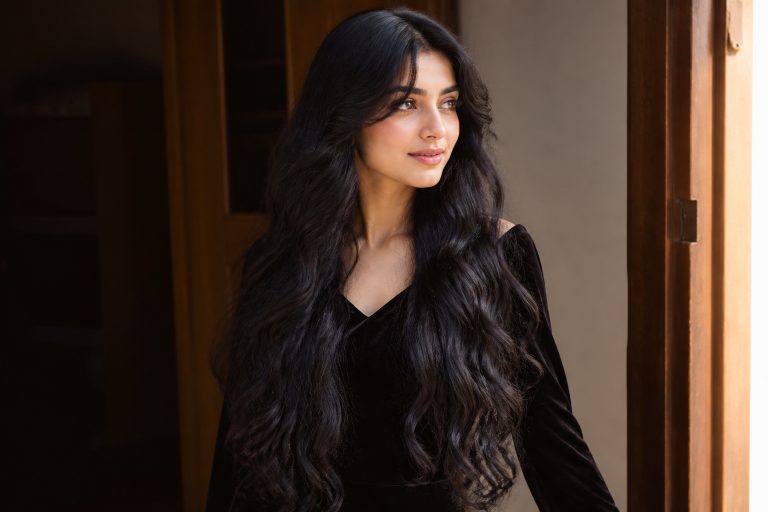





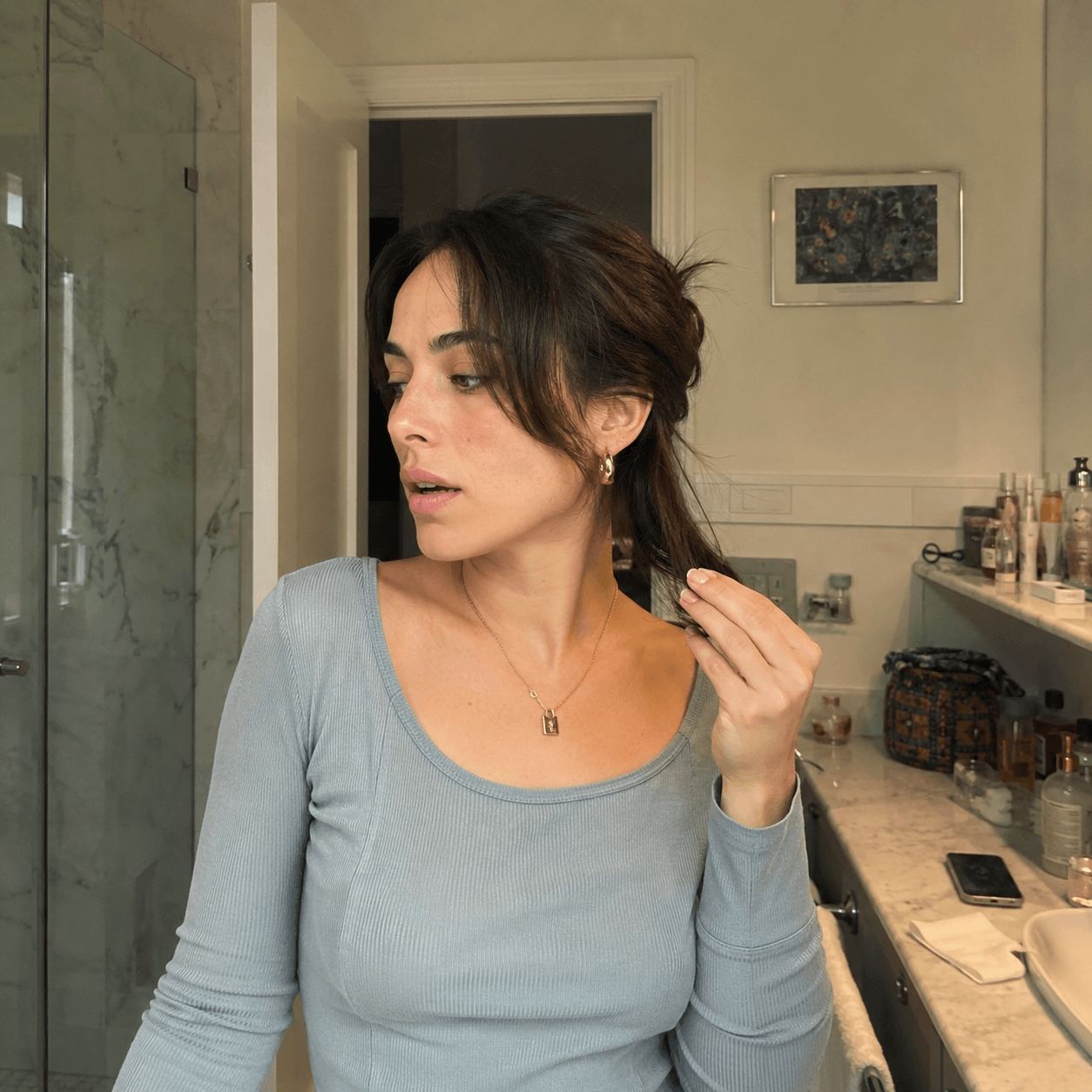
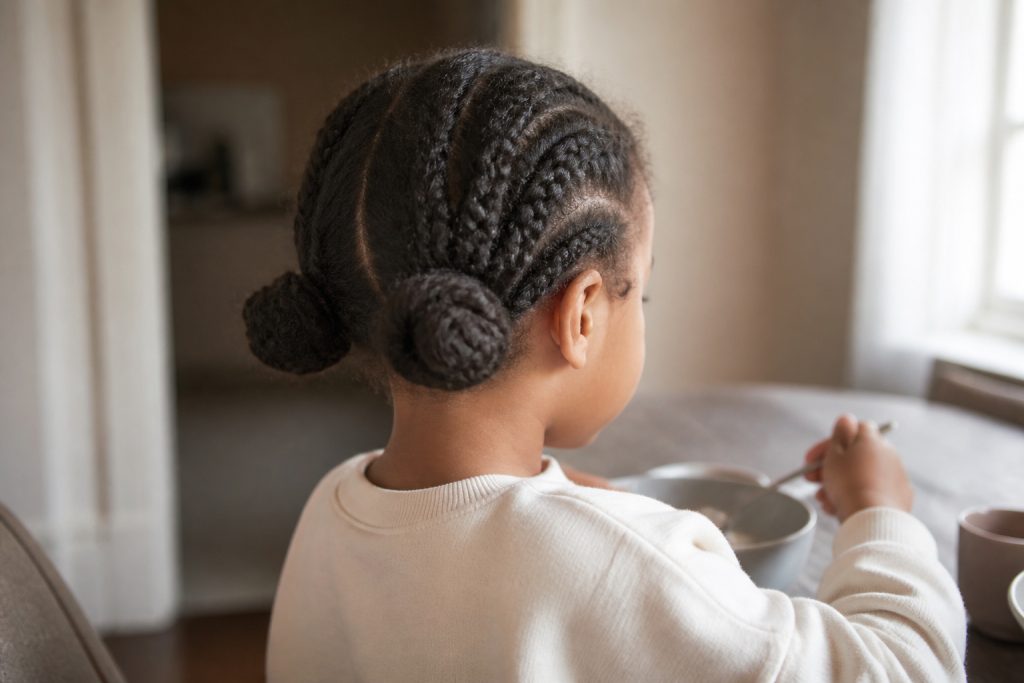

I tried flat twists with buns on my kid the week school started and it kept her hair neat for five mornings without a full redo. Protective hairstyles for kids are what I reach for when I want a longer wash week and fewer morning battles. These 16 looks cover baby-afro to shoulder-length textures, are mostly low tension, and aim for quick morning refreshes, not salon installs.
They run from 5 to 20 minutes on a normal morning. Think flat twists, two-strand twists, low buns, and playful bubbles, plus a few braid options for longer wear. The trend I kept testing myself is low-tension styling that still reads like a tidy school hairdo.
16 Protective Hairstyles for Kids That Buy You a Longer Wash Week
Flat-twist crown into twin buns
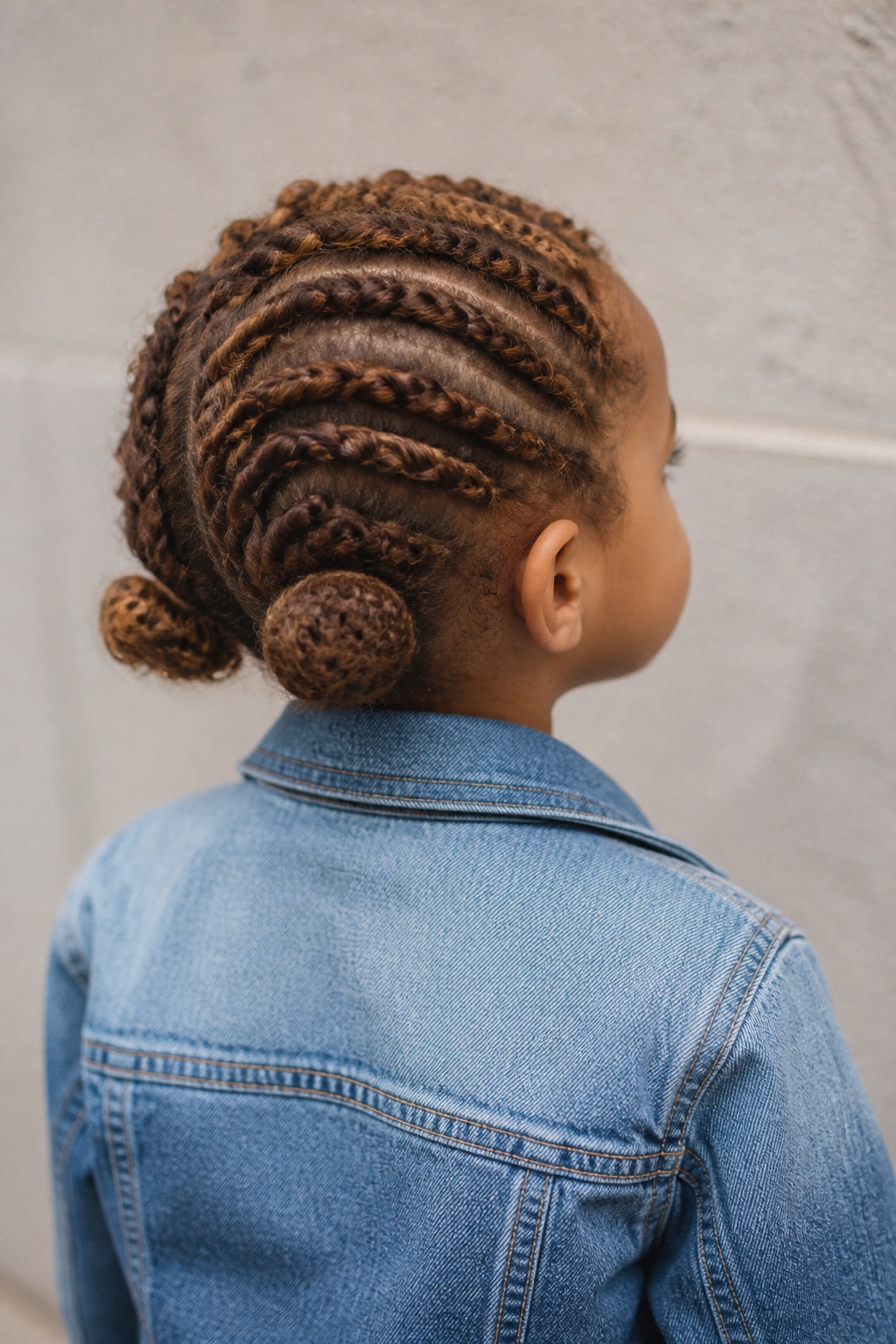

Best for medium to thick textured hair. Trim the ends every 3 to 4 months. About 10 to 15 minutes each morning.
This look keeps ends tucked and the scalp neat, so the style survives recess. The payoff is a tidy silhouette that flatters round and oval faces because the crown lift balances features. The trick is small, even parting and low-tension twisting; stop twisting when you reach the mid-shaft so the buns stay soft. Most people over-tighten the edges. If you feel scalp pulling, loosen the base and retwist a smaller section.
Mini puffs with flat twists at the perimeter
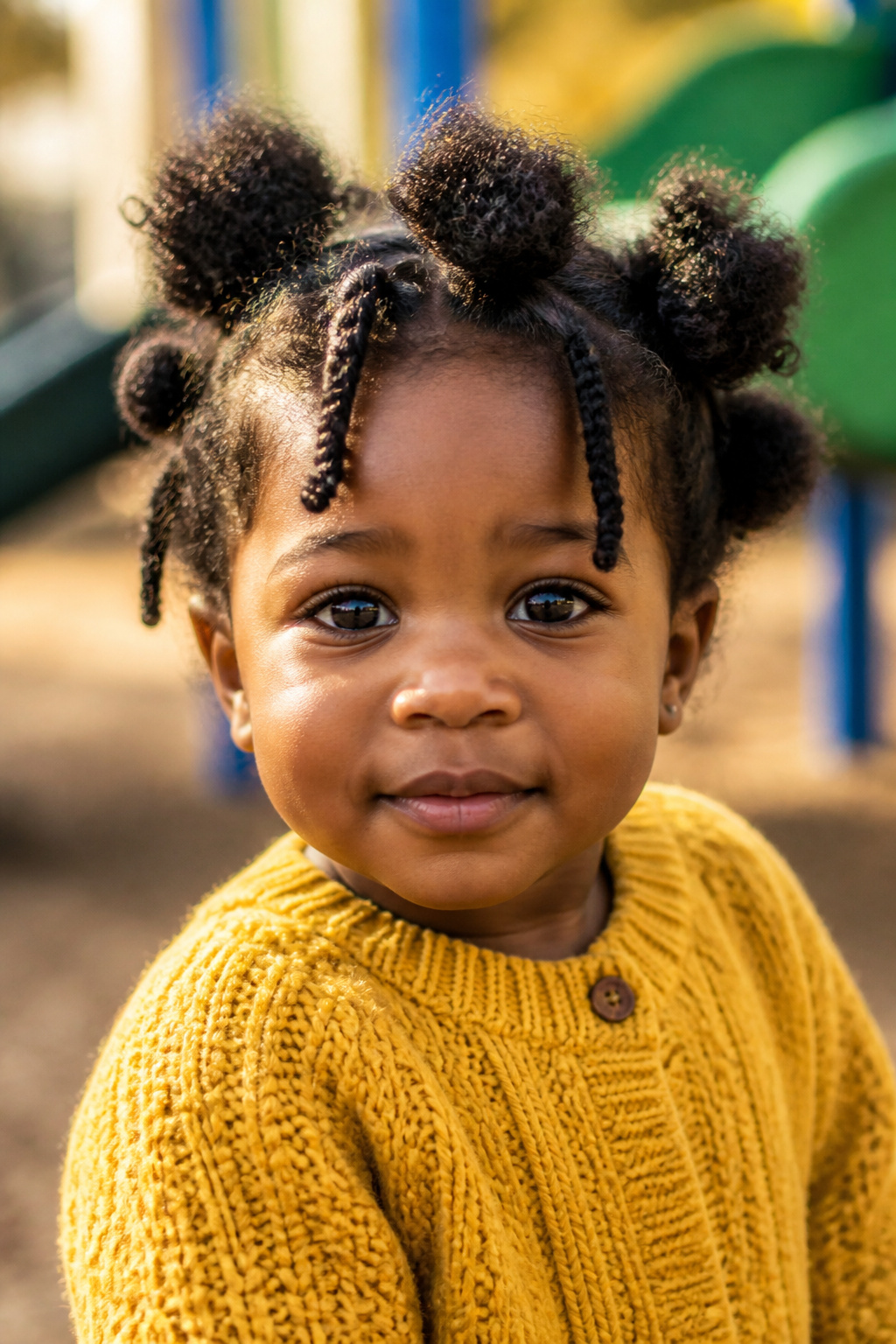

Best for short to medium natural hair. Re-tighten puffs every 2 to 3 days. About 7 to 12 minutes.
Mini puffs are cute, quick, and protective because ends are tucked into the puff. This flat-twist perimeter reduces frizz while leaving a soft hairline. The technique detail is to use your fingers, not a fine-tooth comb, for parts to avoid breakage. Honest moment: I once used too much gel and my daughter's hair looked shiny but felt crunchy and uncomfortable; less product is better. Use a satin bonnet overnight.
Two-strand twists with tucked ends
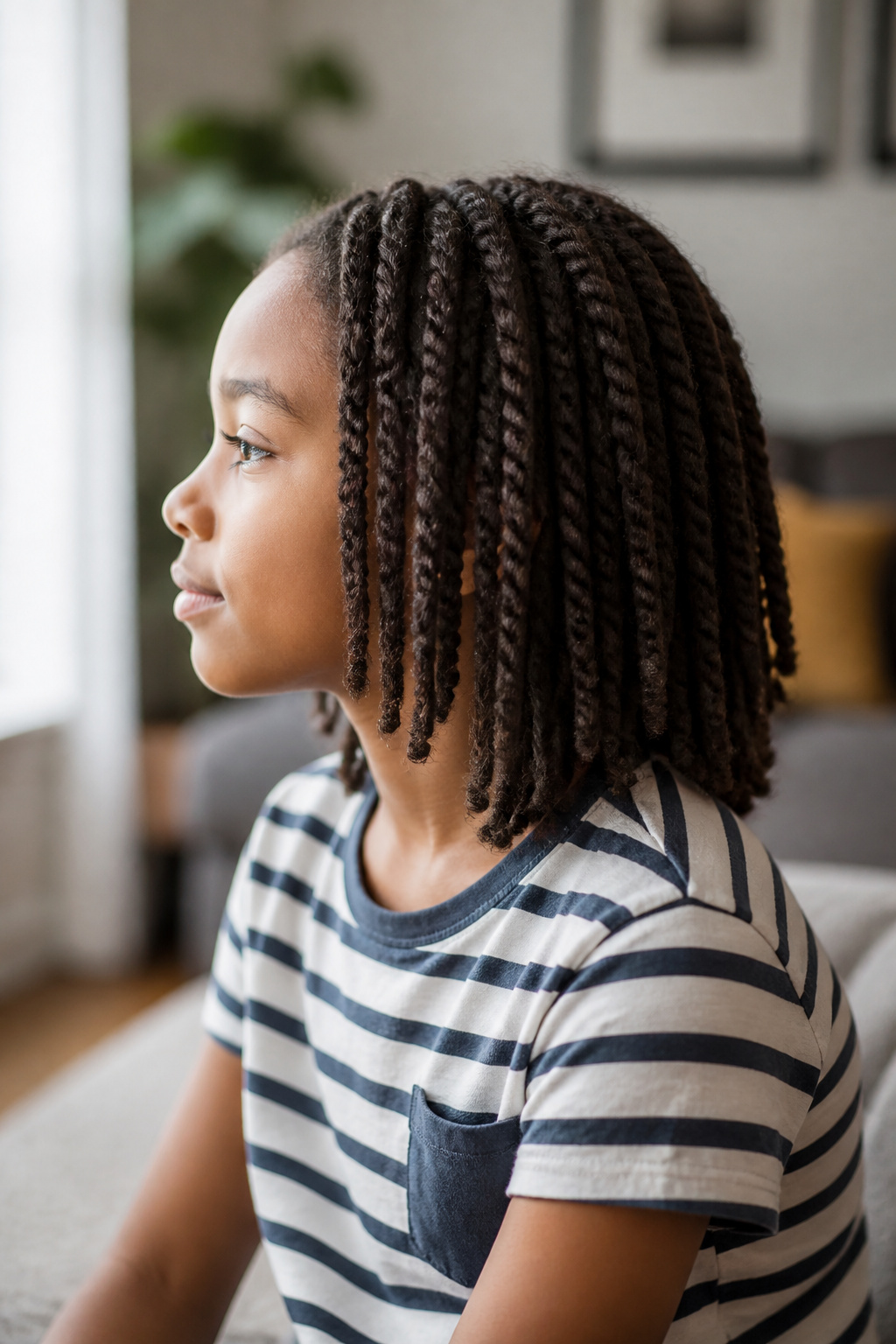

Best for type 3 to 4 textures. Refresh every 4 to 7 days. About 15 to 25 minutes to install depending on size.
Two-strand twists are gentler than braids and still protective when you tuck the ends into a bun or pin them. The visual payoff is rope-like definition that looks grown-up and lasts a week or more. Technique note: keep sections consistent and moisturize before twisting. A common mistake is making sections too large; large twists look full but weigh the hair down.
Vanilles (rope twist) half-up, half-down
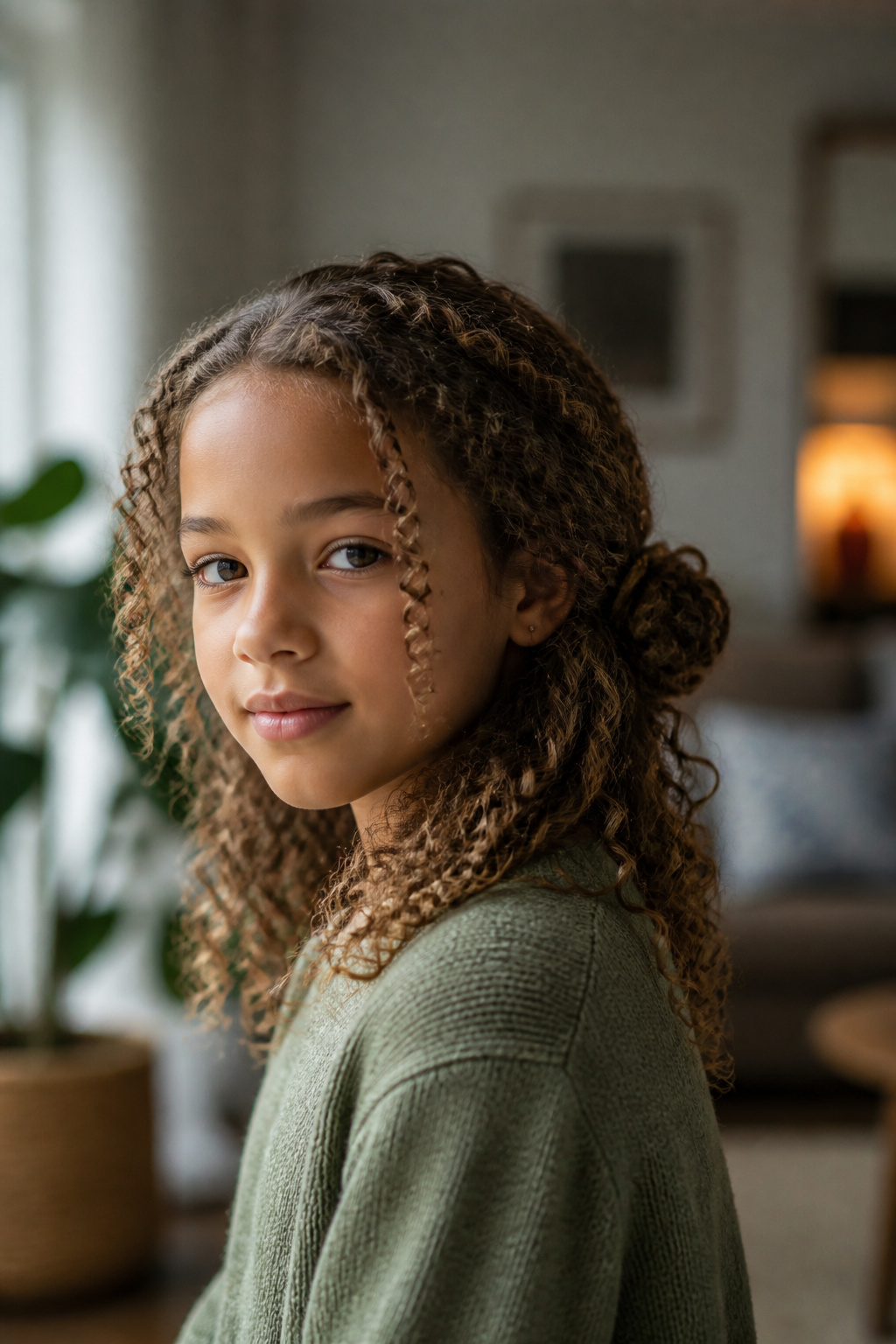

Best for loose curl patterns and mixed textures. Lasts 3 to 7 days with satin protection. About 8 to 12 minutes.
Vanilles read polished and boho without the time of box braids. I used them on my niece when we needed a quick event style; they softened her face and cut morning detangle time. Technique: twist down to mid-length and secure ends inside a knot to protect them. Do not over-oil the roots or the twists lose definition.
Diagonal bubble ponytail with connected sections
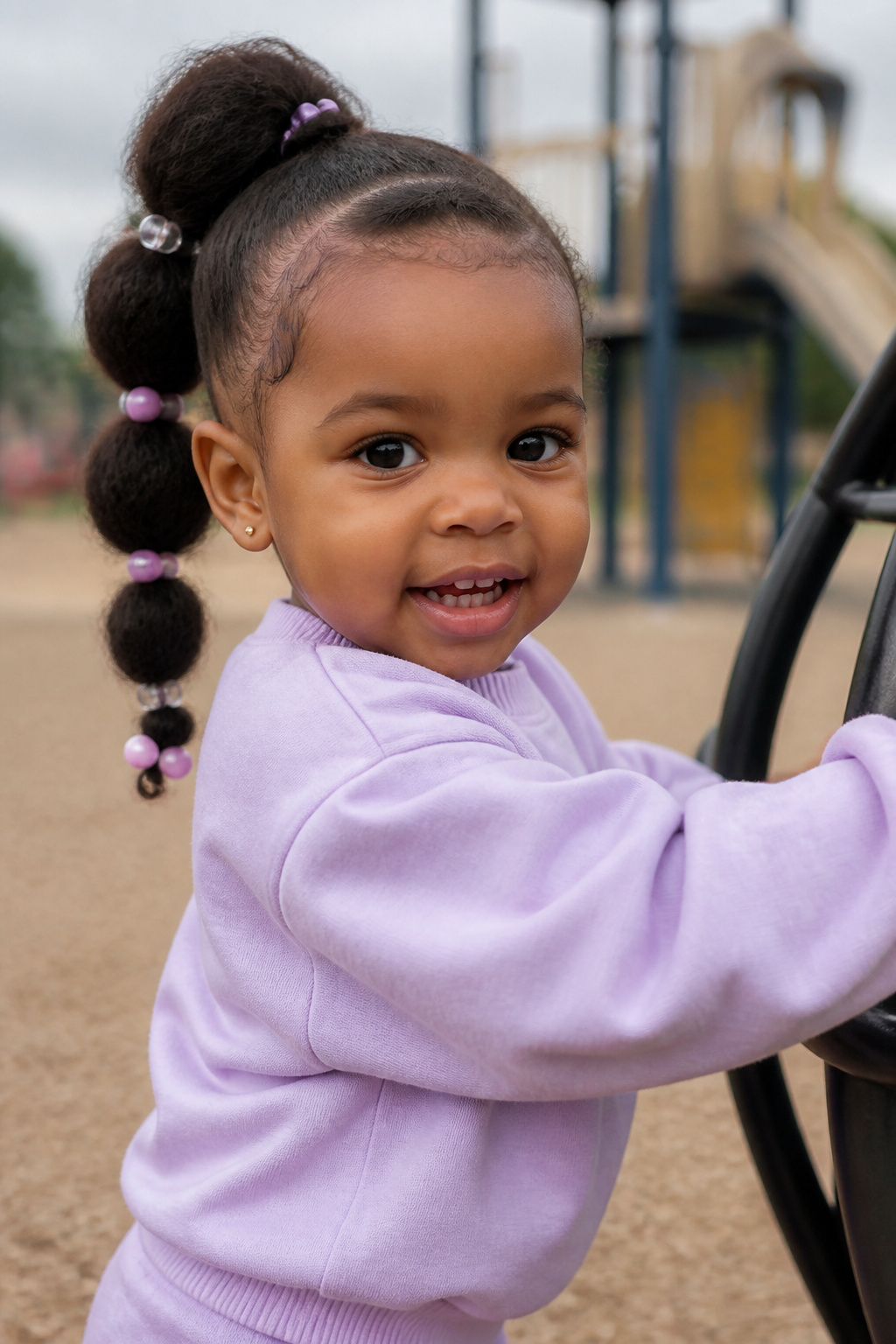

Best for toddler-length hair with front length. Stays neat for 3 to 5 days. About 10 minutes.
Bubble ponytails turn a plain pony into playful shape that survives playtime. The payoff is visual rhythm along the length, and diagonal parting gives it personality. Start bubbles with small elastics and leave space between bands; the mistake is overcrowding bands which causes breakage. Use tiny elastic bands and a light spray moisturizer to smooth the scalp.
Connected bubble ponytail with beads for personalization
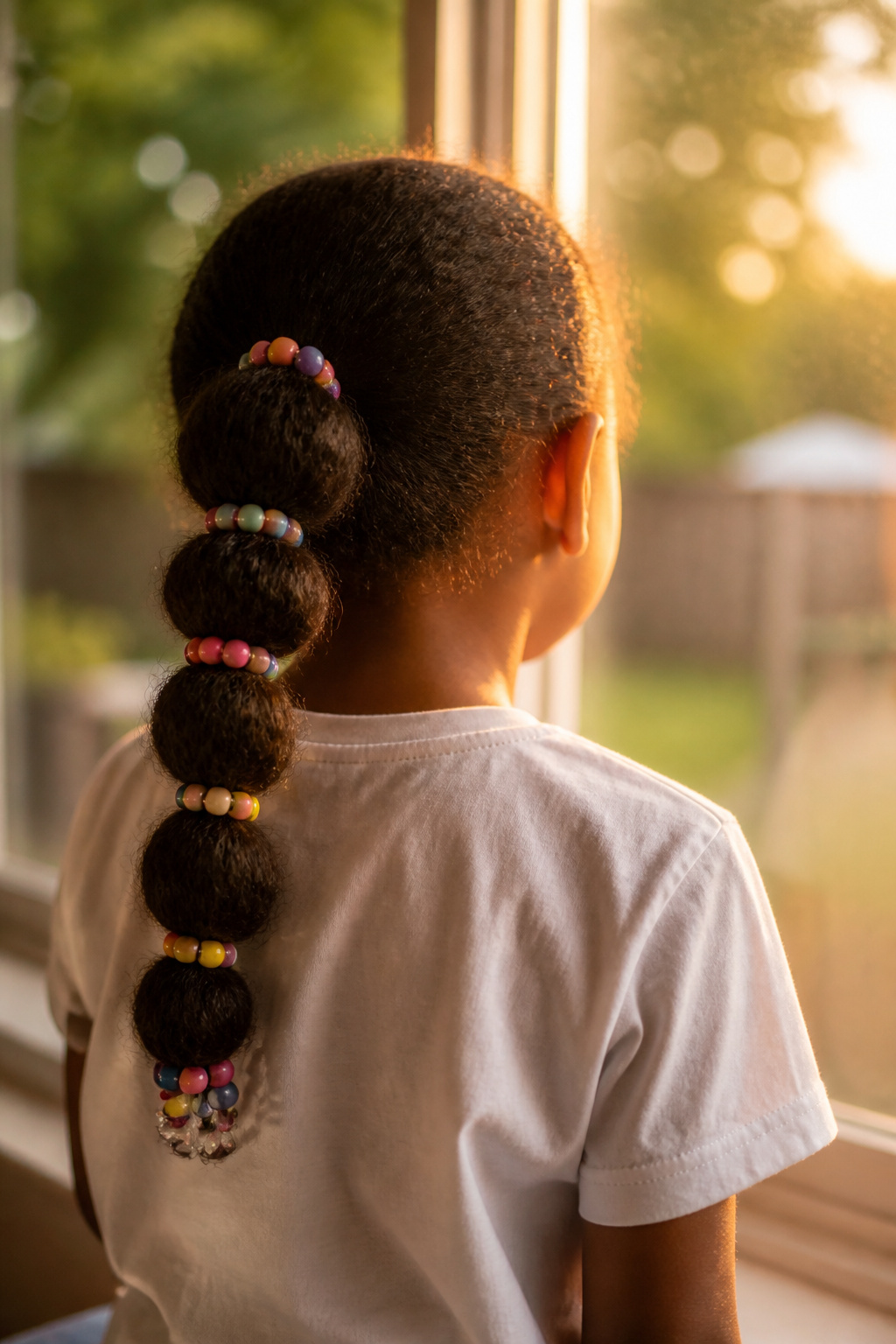

Best for medium-length hair. Good for personalization and longer wear. About 12 minutes.
Beads help kids choose and keep hairdos. The result is a playful, low-tension style that hides ends. Technique: knot beads gently onto twists or bubble sections, not directly on fragile short ends. Honest tip: my daughter picked large wooden beads once and the weight pulled her ponytail; go small and light for toddlers.
Low-tension no-braid twist knots
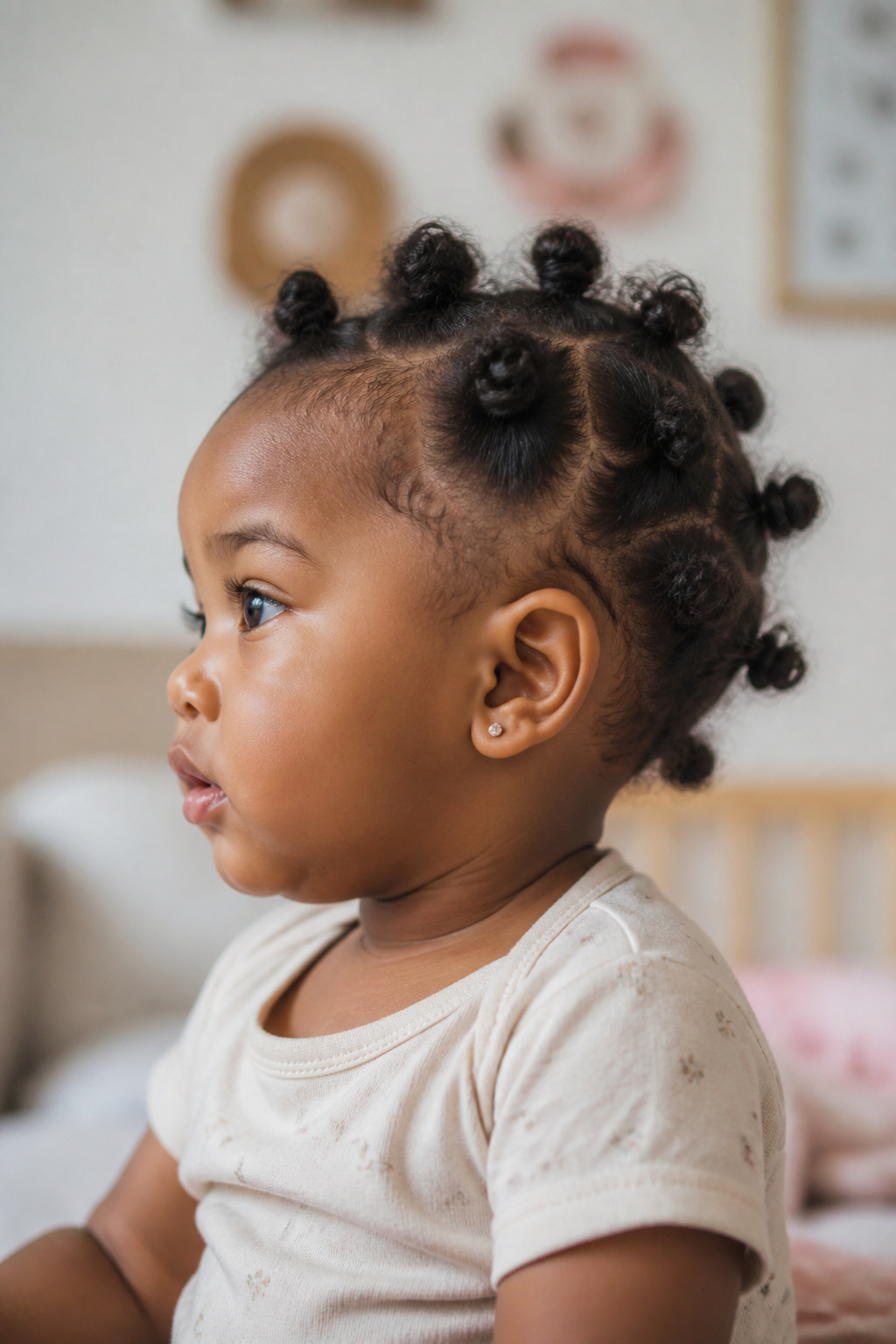

Best for sensitive scalps and very young kids. Lasts 3 to 5 days with satin protection. About 8 minutes.
This braid-free option is gentle on edges and still tucks ends away. The visual payoff is a soft, lived-in look that looks intentional without tension. Technique: create loose sections and coil each into a knot that sits close but not tight. Warning in one sentence. Tight knots cause the same damage as tight braids.
Lightweight kid-friendly box braids with extensions
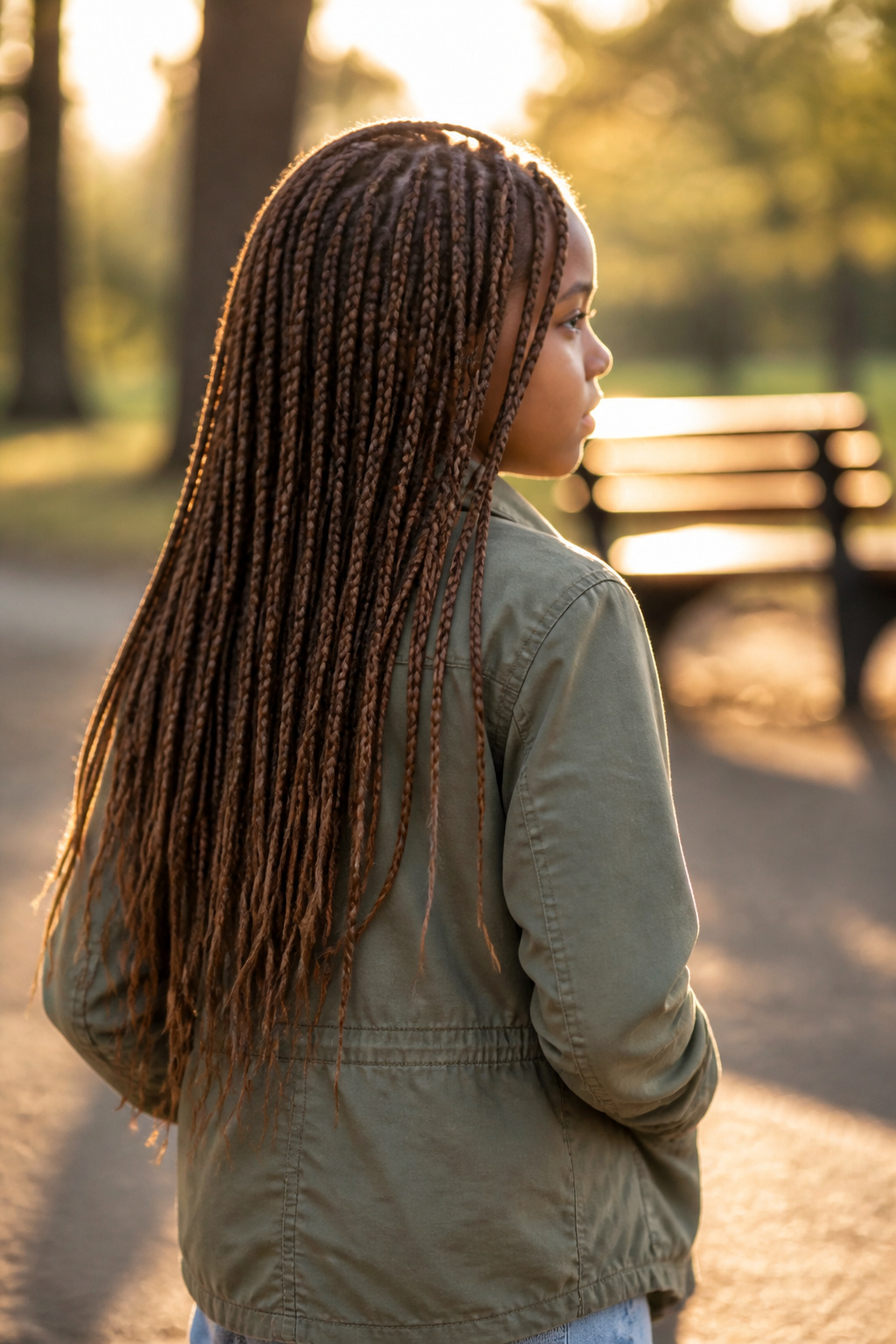

Best for older kids who tolerate longer installs. Wear for 2 to 4 weeks with good scalp care. Installation takes 1 to 3 hours.
Braids with lightweight extensions buy you the longest wash week, and they can be styled into buns or ponytails. The payoff is low-daily maintenance and style versatility. Technique: ask for lightweight extensions and medium braid size to reduce scalp load. Common error: heavy jumbo braids at a young age; speak up about tension and weight.
Moisture-first protective bun
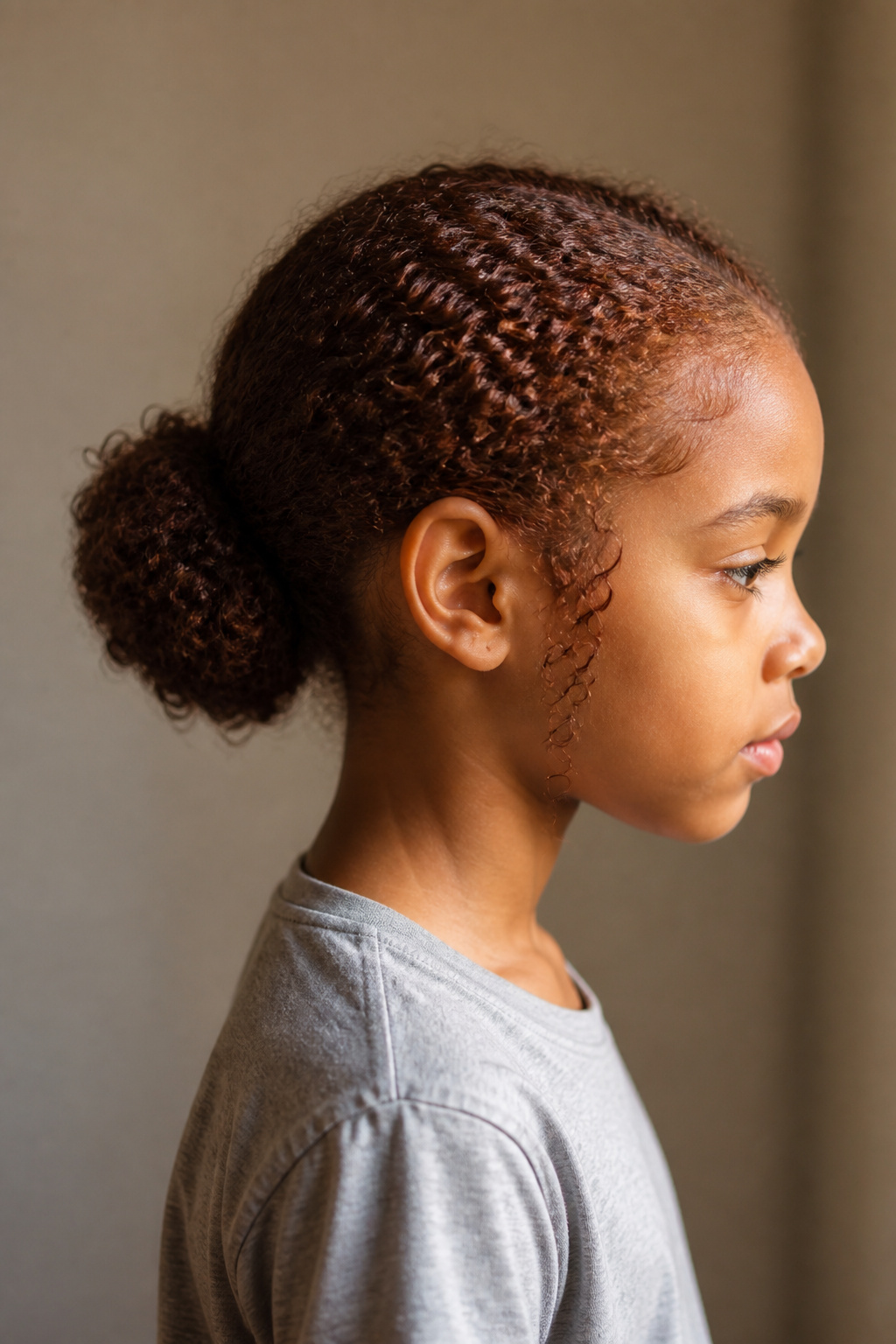

Best for textured hair gathered into a soft bun. Refresh midweek with water and re-bun. About 5 minutes each morning.
A moisture-first bun protects ends and is the fastest way to stretch a wash. The visual payoff is smoothness and a polished school-ready look. The trick is to spritz water-based leave-in, then oil lightly to seal. Overdoing butter is a mistake that leads to buildup and itchy scalps.
Small-section bantu knots for extra protection
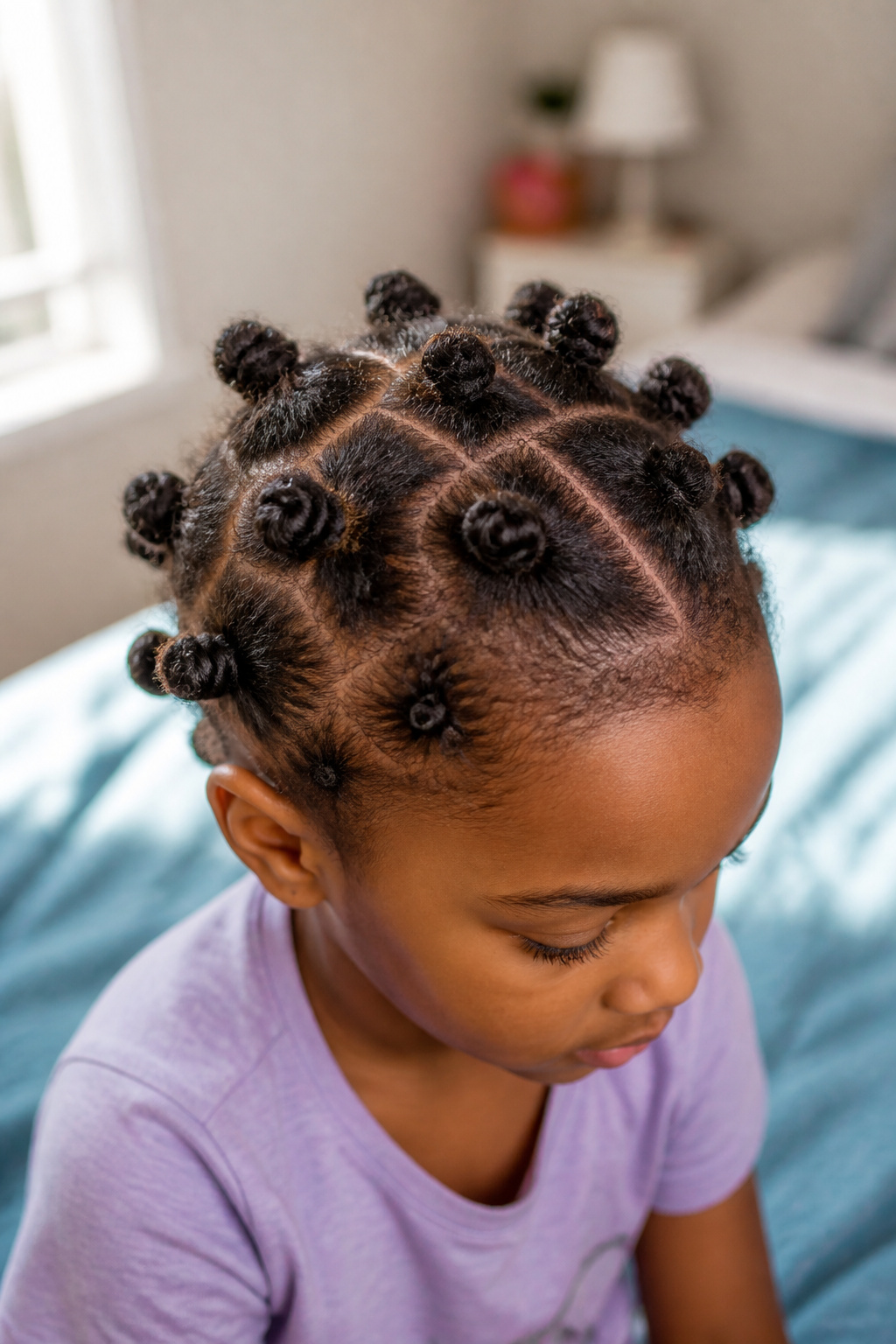

Best for short to shoulder-length hair. Lasts 4 to 10 days. About 20 to 30 minutes.
Bantu knots lock ends and create a cute, protected style that doubles as a heat-free curl set when released. The payoff is protected ends and compact shape. Technique: use small sections for lighter weight. Honest note: I tried large knots once and they flattened the crown; keep sections small for toddlers.
Shoulder-length flat twist bob for short hair


Best for shoulder-length textures and shorter hair. Trim every 8 to 10 weeks. About 10 minutes.
If hair is too short for long braids, this flat-twist bob keeps hair managed and age-appropriate. The payoff is a controlled silhouette that survives school mornings. Technique: twist only along the perimeter and leave the central body loose for movement. Do not try heavy extension styles on short hair; it will look mismatched.
Mini cornrows feeding into a soft ponytail
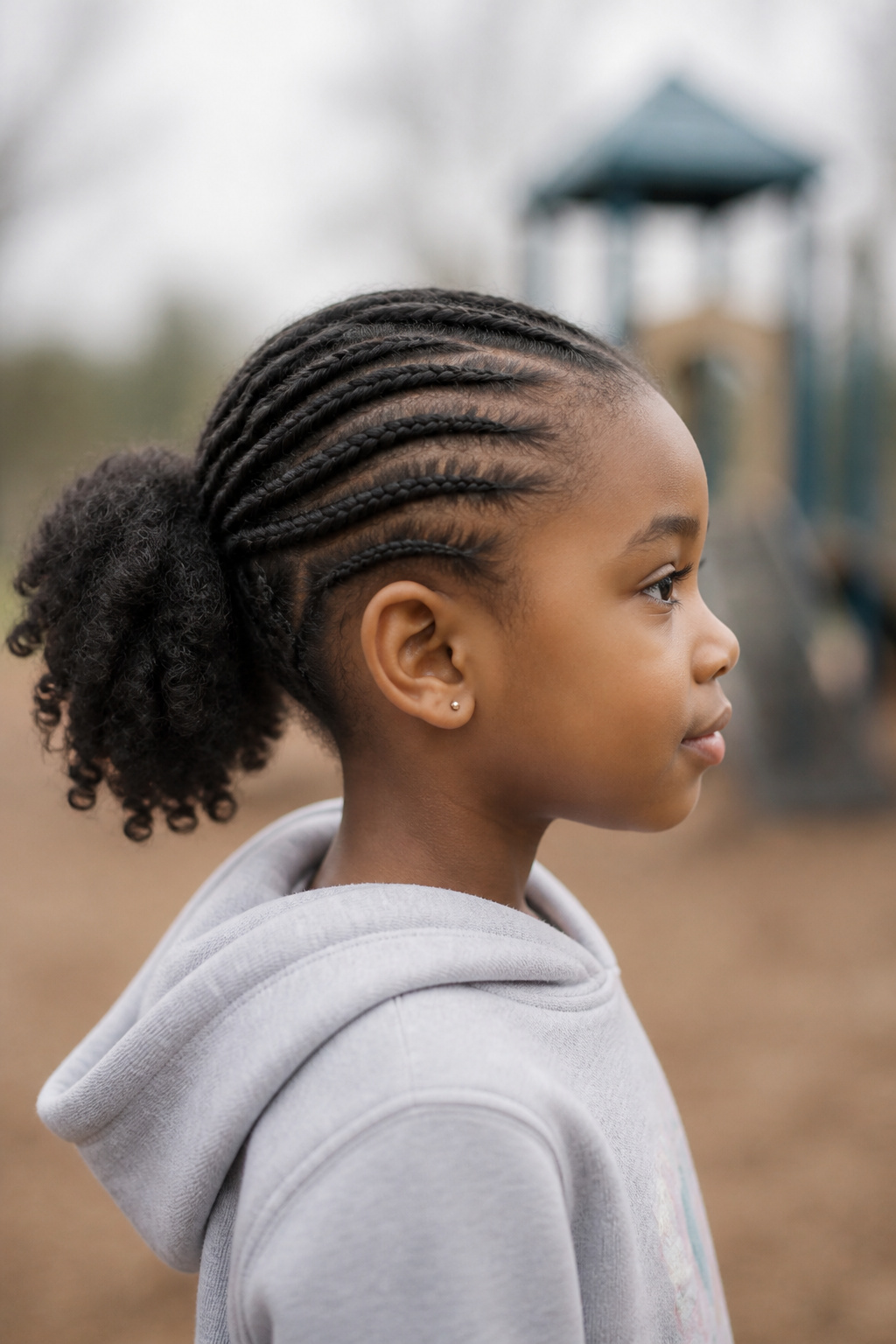

Best for active kids who need scalp-neat styling. Lasts 1 to 3 weeks with care. About 30 to 45 minutes to install.
Cornrows give structure and stay put through play. The payoff is a tidy hairline without daily fuss. Technique: keep rows small and low-tension; ask the stylist for soft edges. Most people let cornrows get too tight on the first day; loosen the first row slightly if the child complains.
Pineapple puff for day-two bounce
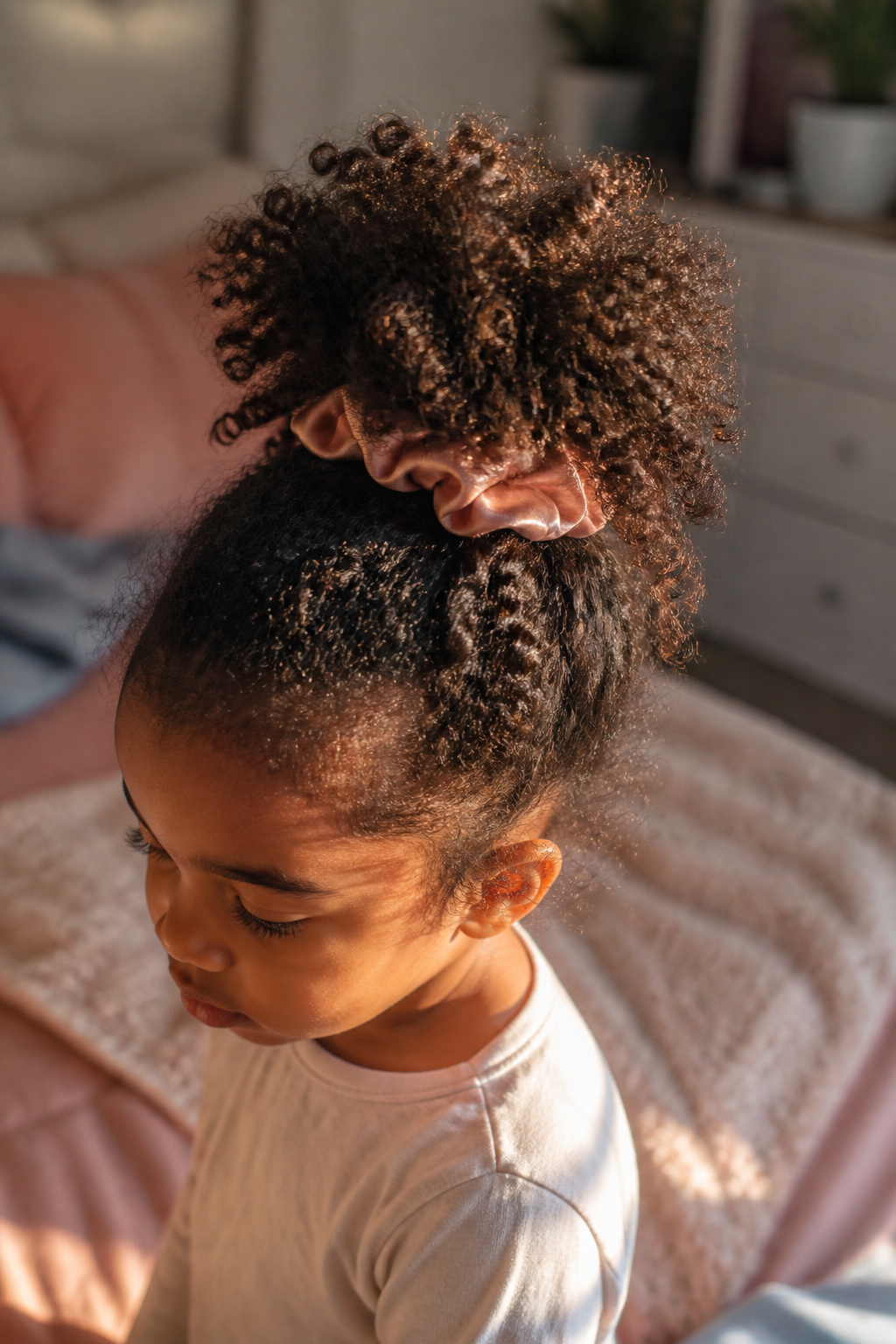

Best for long curls who need a day-two style. Lasts 1 to 2 days with satin protection. About 2 minutes morning fix.
The pineapple is the easiest way to preserve curl pattern without a wash. The payoff is a quick volume boost and protected ends. Technique: gather hair loosely at the crown, use a satin scrunchie, and avoid tight elastics. I once used a tight band and ruined her day with a headache. Keep it loose.
Half-up two-strand twists into a ponytail


Best for medium-length hair and school days. Refresh weekly. About 10 to 15 minutes.
This hybrid keeps the front neat while letting the back play. The payoff is a tidy, face-framing look that is practical for school photos. Technique: twist the front into small sections and pin them into the ponytail base. Avoid heavy gels at the roots; they cause flaking and itch.
Scarf-wrapped high puff with soft edges
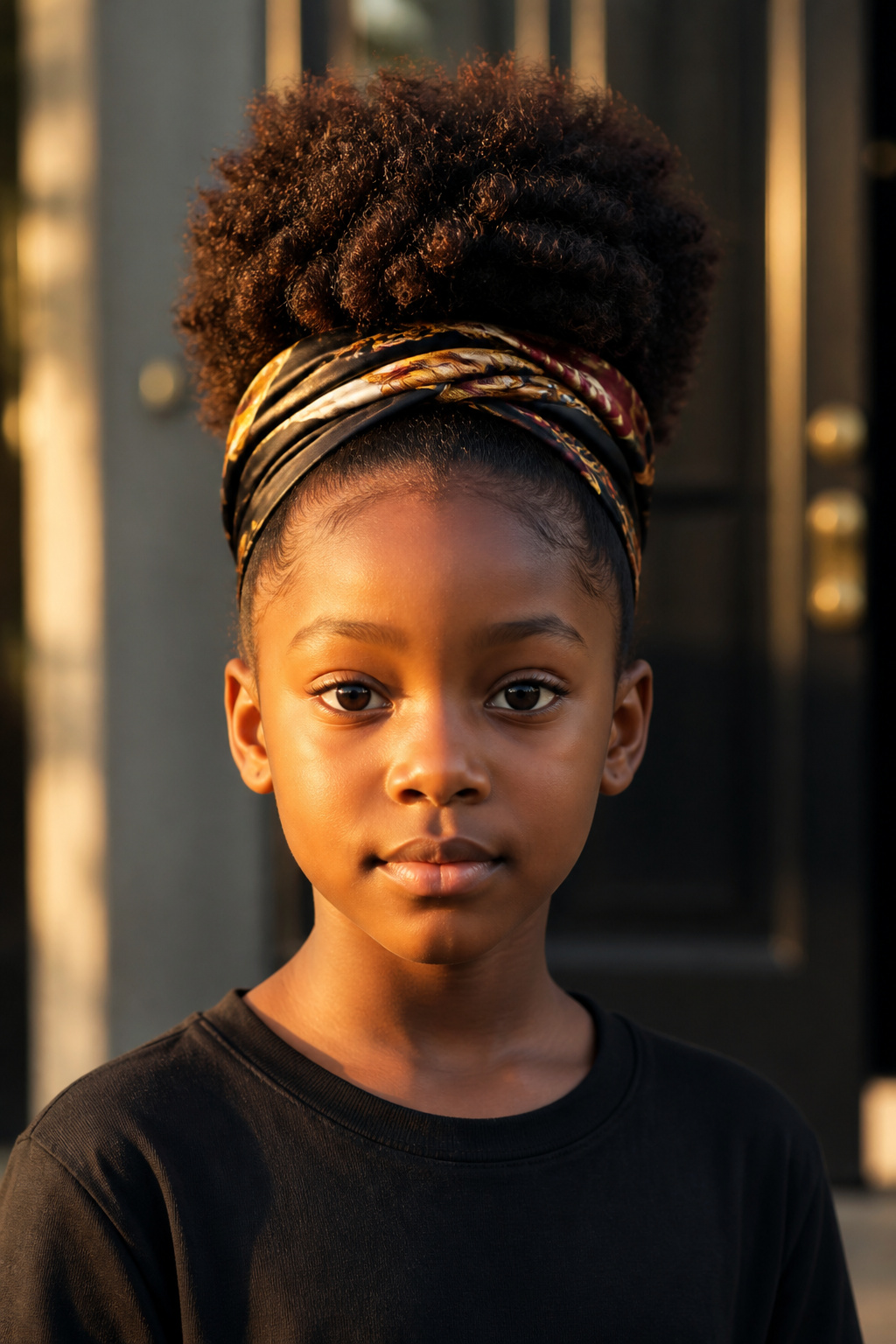

Best for short to medium textured hair. Lasts 3 to 5 days with bedtime scarf. About 5 minutes.
A wrapped puff looks stylish and protects hair if done gently. The payoff is a polished silhouette great for special events. Technique: tuck edges softly and secure scarf with a loose knot. Mistake to avoid. Do not tie the scarf too tight around the hairline.
Two-strand twist out tucked into a low bun for second-day styling
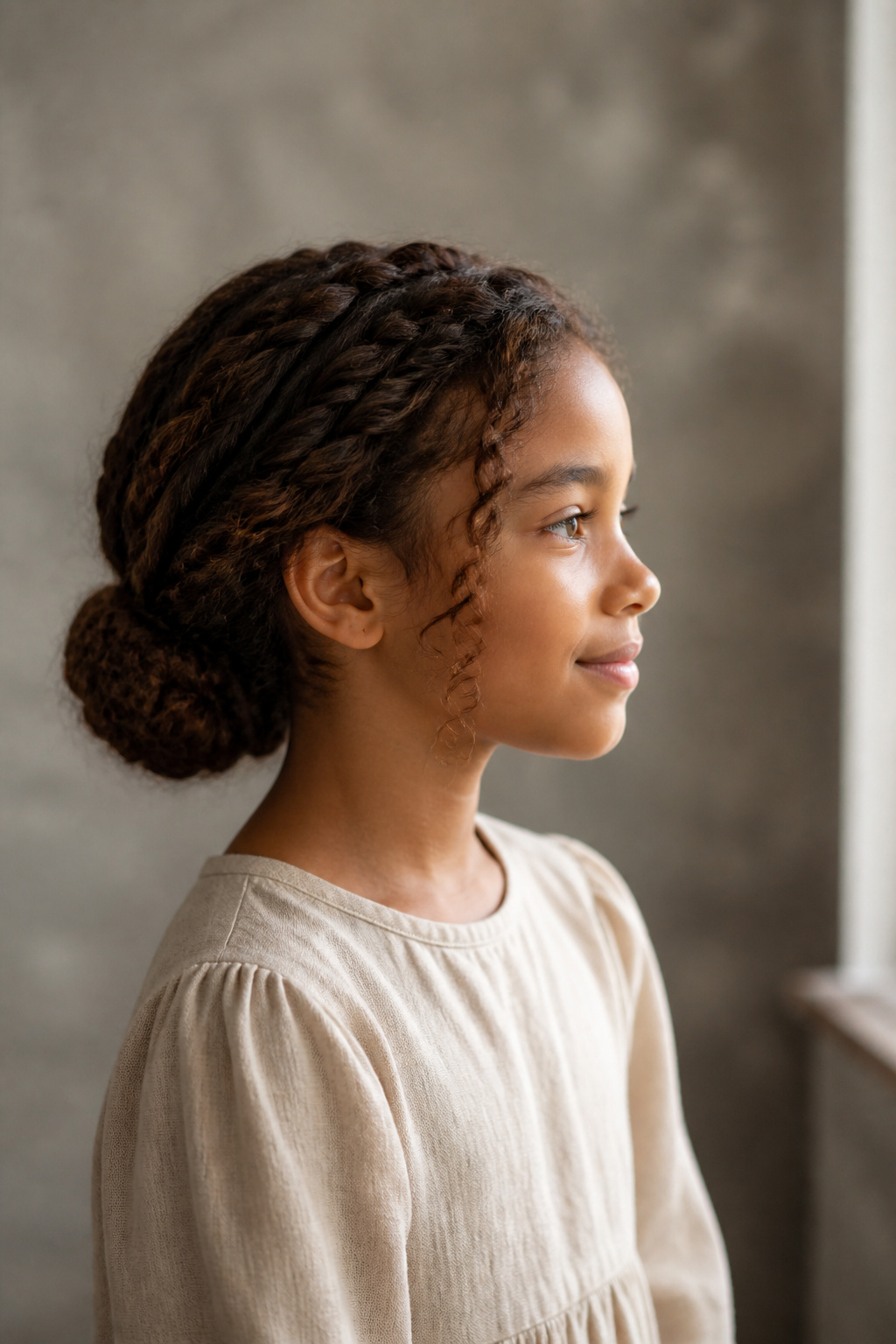

Best for kids who want a refreshed look without redoing the whole style. Lasts 2 to 3 days. About 7 minutes to refresh.
A twist-out tucked into a bun gives new shape to day-two hair and keeps ends covered. The payoff is a softer, lived-in protective look. Technique: release only the front twists and tuck the rest into a bun. Over-brushing the twist-out ruins the curl definition; use fingers.
What You'll Need to Get This Look
Heat Tools
1.25-inch ceramic curling wand ($30 to $60) for looser curl sets that mimic vanilles.
1-inch titanium flat iron ($40 to $90) for smoothing buns on thicker hair.
Compact travel blow dryer ($25 to $50) when you need a quick dry.
Styling Products
Alcohol-free leave-in conditioner spray, 8oz ($8 to $18) for moisture-first prep.
Lightweight sealing oil, 2oz ($6 to $20) to lock in hydration.
Anti-itch scalp oil, 1oz ($10 to $25) if your child complains of dryness.
Hair Care and Protection
Satin bonnet for kids ($8 to $18) to preserve styles overnight.
Satin pillowcase standard size ($10 to $20) as a backup.
Accessories and Finishing
Tiny no-metal elastic bands, 200 pack ($6 to $12) for bubble ponytails.
Satin scarf 22×22 inches ($6 to $18) to wrap puffs.
Budget Swaps
Microfiber hair towel, kids size ($7 to $15) instead of expensive drying caps.
Wide-tooth detangling comb ($4 to $12) for gentle detangling.
Drugstore water-based leave-in spray, 8oz ($5 to $10) when you want a cheaper refresh option.
Shopping Tips for These Looks
Buy satin during sales: Bonnet and scarf sets drop during summer and holiday deals. I waited for a sale and replaced two bonnets for less than $20 total, and my daughter kept styles longer.
Try lightweight extensions for braids: Ask your stylist for synthetic lightweight packs; they reduce scalp strain. Compare an extra light braid pack before booking.
Use drugstore leave-ins for daily refresh: I swapped an expensive leave-in for a drugstore water-based spray and saw the same day-to-day hold. Try a budget leave-in spray, 8oz.
Stock up on tiny elastics: They run out fast. A multi-pack saves panic mornings and limits reuse that causes breakage. I always keep two packs in the car.
Frequently Asked Questions
How long should a kid wear protective styles between washes?
Most styles are comfortable for 1 to 4 weeks depending on scalp health and installation weight. Check the scalp weekly and remove styles if itch or buildup appears.
Are protective styles safe for toddlers with fine hair?
Yes when they are low tension and light. Use small sections and avoid heavy extensions. Ask for "low-tension" or "no tight edges" when booking.
How do I preserve styles overnight?
Wrap hair with a satin scarf or bonnet and sleep on a satin pillowcase. These reduce friction and help hair survive day two.
Can I do these styles at home or should I see a stylist?
Many are doable at home with practice, especially two-strand twists and buns. For extensions or tight cornrows, a trained stylist is worth it to avoid scalp damage.
What are signs a protective style is causing damage?
Persistent scalp pain, receding hairline, or increased shedding are red flags. Loosen styles immediately and consult a stylist.
Where to Start
If you want the biggest win for the least drama, try a moisture-first low bun or a flat-twist crown. Both are kinder to edges, quick to refresh, and perfect for extending a wash week. Which look are you trying this weekend?