





I cut my kiddo a chin-length bob one spring because tangles were driving both of us nuts. That cut alone saved mornings and got the first "who styled her hair?" compliment I did not expect. These 14 toddler girl hairstyles are what actually lasts through playground slides, snack bowls, and emergency puddle jumps. They work for straight, wavy, and fine textures and for hair from chin to mid-back. Pick the ones that match your child’s length and your morning patience.
They are low-fuss, kid-proof, and current. Most take under 10 minutes once you know the tricks here: damp and section, gel at the fingertips, and secure with clear elastics. I leaned into braid-based holds and short bobs that grow out softly, because texture and movement beat stiffness this year.
14 toddler girl hairstyles that stay put through wild playdates
Chin-Length Bob with Tucked Fronts


Best for fine to medium straight hair. Trim every 12 weeks. About 3 to 5 minutes each morning.
This is the no-fuss haircut that actually looks tidy after a day at preschool. The visual payoff is a clean jawline that keeps hair out of the eyes. Ask your stylist for a chin-length bob with soft interior weight, not a harsh perimeter. The trick in the morning is a quick mist, smooth with your hands, and tuck the front behind one ear before you run out the door. Most people overwork a brush and make it flat; your kid’s movement will give it natural shape.
Soft Layered Toddler Bob for Volume


Best for fine hair that needs lift. Grows out softly. About 6 minutes to style.
If your child’s hair goes flat by recess, face-framing layers are the answer. The payoff is extra lift without daily backcombing. I ask the stylist for graduated layers that start near the cheekbone. In the morning, spritz with a lightweight volumizing mousse at the roots and rake with fingers; a quick cool blast from the dryer gives structure. Common mistake: heavy product at the ends. That kills the bounce.
Angled A-Line Bob That Keeps Bangs Out of Faces


Best for wavy to straight hair. Needs shaping every 10 to 12 weeks. About 4 to 7 minutes.
This cut brings the longest pieces forward so bangs and face hairs land where they belong. It flatters rounder faces by adding a vertical line. The key styling note is to blow-dry the front pieces forward and under with a round brush; you can use a light smoothing cream. One honest tip: I once asked for too much angle and we had an awkward grow-out month. Ask for a softer graduation so it ages well.
Double Puffs for Maximum Playproof Volume
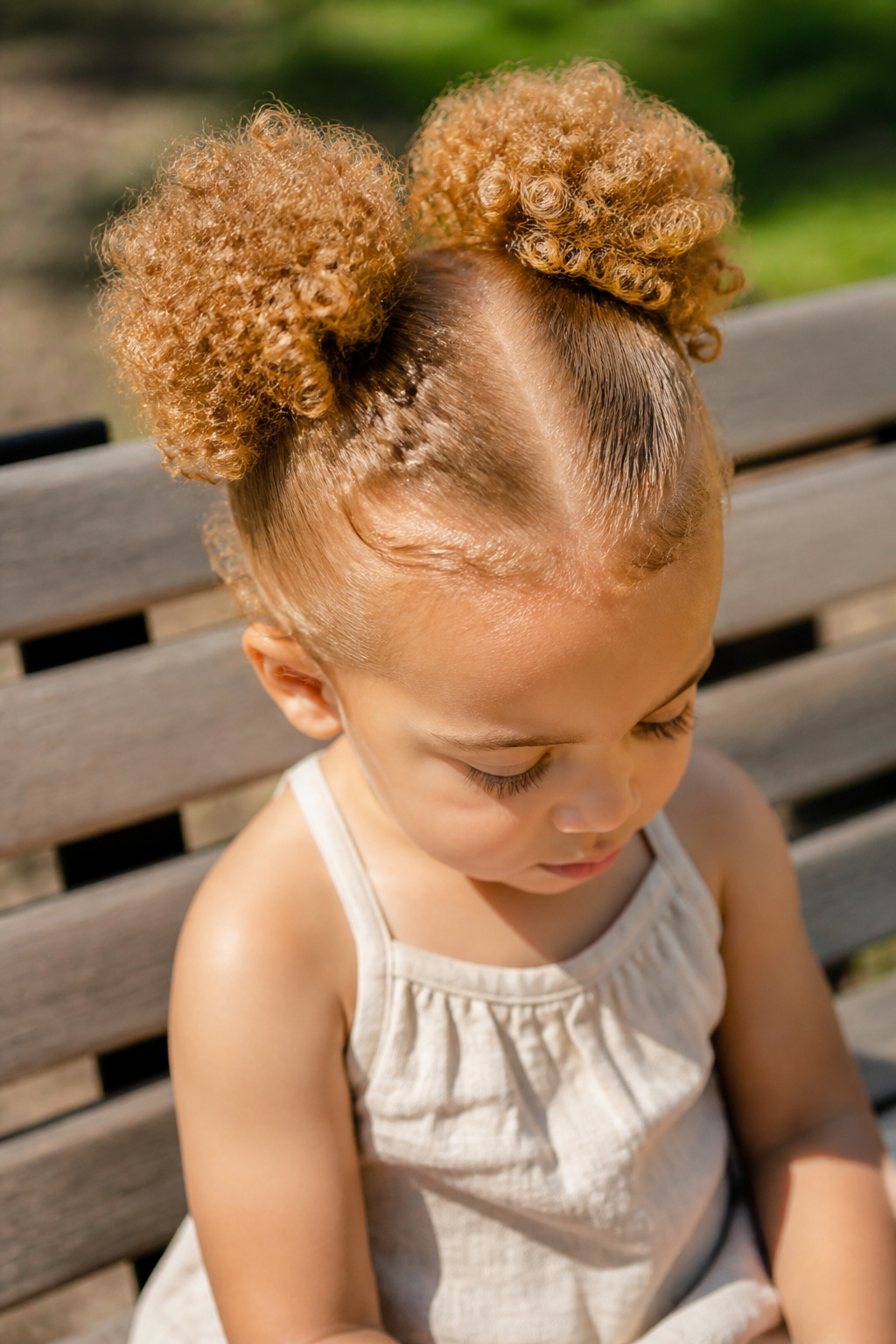

Best for thick or curly hair. Lasts all day with secure elastics. About 5 to 8 minutes.
Double puffs are playful but supremely practical. The payoff is a secured style with bouncy volume that survives slides. The trick is sectioning cleanly down the middle, dampening each half, and wrapping the hair into a small high pony before fluffing into puffs. Avoid overloading with gel at the scalp; use fingertips only for edges. The honest downside: they can feel lopsided if you secure one side looser, so double-wrap elastics and check symmetry.
Halo Braid That Stays Put


Best for shoulder-length to long hair. Holds all day if sprayed lightly. 10 to 12 minutes to braid.
A halo braid looks polished but is a workhorse for active kids. The visual payoff is a crown of hair that tucks away loose lengths. Start with damp hair and use a duckbill clip to section; braid with medium sections and anchor the ends under the braid. One technique I learned the hard way is to keep the braid tight near the nape to stop slippage. Spray lightly with a flexible-hold hairspray, not a crunchy one.
Low Slicked Bun for Second-Day Hair


Best for second-day hair. Easy to refresh. About 4 to 6 minutes.
For greasy or second-day hair, a low slick bun keeps things tidy and comfortable. The payoff is a neat, school-ready look that survives helmets and swings. Use a small amount of gel on your fingertips to smooth hair back into a low pony, then twist into a bun. Common mistake: too much product at the roots makes a crunchy halo. Use gel sparingly and smooth edges with your palms.
Topsy-Tail Polish Trick for Flat Sections


Best for medium hair that refuses to lie flat. Quick fix in under 5 minutes.
Nobody tells you this, but a topsy-tail can flatten a puffy section and keep a ponytail tidy through play. I use a small section, make a tiny pony, flip it into the loop and gently pull to tuck it down. It looks like you worked way harder than you did. The trick is to keep the loop tight but not pinching; otherwise the section will pop out within an hour.
Tiny French Braid Pigtails for Active Days


Best for long fine hair. Secure with clear elastics. 8 to 10 minutes total.
Small French braid pigtails anchor hair close to the scalp, which is why they last through rough play. The payoff is a disciplined look that still feels cute. Start with damp hair, create clean parts, and braid with small sections. Pro tip: apply gel to the fingertips to smooth baby hairs rather than raking product through the whole length. I once braided too loosely and it unravelled by snack time; keep tension consistent.
Twisted Rope Headband to Keep Flyaways in Place


Best for shoulder-length hair and face-framing layers. Lasts most of the day. About 5 to 7 minutes.
A twisted rope headband is a neat, less-bulky alternative to a full crown braid. The payoff is controlled hair at the face without pins. The technique: take a 1-inch section from one temple, twist away from the face while adding small lengths, then pin under the opposite ear. Common mistake: twisting too loosely makes the band fall; keep it snug but comfortable.
Mini Piggy Tails for Short, Play-Friendly Style


Best for very short to ear-length hair. Fast and secure. About 2 to 4 minutes.
When length is limited, mini piggies are a lifesaver. The payoff is hair that is both adorable and unlikely to tangle. Use tiny clear elastics and keep sections small. I do not add product unless the hair is very frizzy; a dampening spray is usually enough. Honest note: elastic choice matters. Cheap elastics that snag will make hair fray fast.
Soft Curtain Bangs Pulled to the Side


Best for medium density hair and longer lengths. Grows out gracefully. About 3 to 5 minutes.
Curtain bangs are a gentle way to keep hair off the forehead without full commitment. The payoff is softer framing and a breezy look that works with ponytails and buns. Blow-dry bangs with a round brush, sweeping them away from the center. Many people overtrim bangs too short for toddlers; ask for a longer starting length so you can trim gradually.
Braided Bun That Survives Soccer Practice


Best for long thick hair. Keeps hair tidy for hours. 10 minutes to style.
A simple braid wrapped into a bun transforms loose hair into a secure playproof updo. The payoff is a compact shape that stays put under helmets and hoods. I braid from the nape upward to control length, then tuck and anchor with multiple elastics. The honest failure I had was not anchoring with enough elastics; the bun loosened after a vigorous game. Add one more elastic than you think you need.
Flexi-Rod Heat-Free Curls for Special Days


Best for heat-free texture on medium to long hair. Prepare at night. Style time varies.
Flexi rods are my go-to when I want bouncy curls without heat. The payoff is springy, child-friendly curls that survive hugs and car rides. Work on damp hair, roll medium sections away from the face, sleep on a satin pillowcase, and unroll gently in the morning. Don’t detangle dry curls with a brush; finger-comb or use a wide-tooth comb to avoid frizz.
Half-Up Twist with Clear Elastics


Best for medium hair and face-framing layers. Quick and modern. 3 to 5 minutes.
The half-up twist is an easy chic option that keeps hair off the face while leaving length for play. The payoff is just enough polish for parent-teacher meetings without extra effort. Take two sections from the temples, twist toward the back, and secure with a clear elastic. The trick is starting with slightly damp hair for control. Over-twisting creates a tight look that looks forced; keep twists soft.
What You'll Need to Get This Look
Heat Tools
- 1.25-inch ceramic curling wand ($25 to $40) for soft bends on longer toddler hair.
- 1-inch titanium flat iron ($30 to $60) good for smoothing bangs.
- Travel blow-dryer with diffuser ($20 to $50) if you shape bangs or bobs quickly.
Styling Products
- Alcohol-free volumizing mousse, 8oz ($8 to $16) for fine roots.
- Light flexible-hold hairspray ($6 to $14) to set halo braids without crunch.
- Finger gel for baby hairs, travel size ($6 to $12) apply with fingertips only.
Hair Care and Protection
- Satin pillowcase, standard size ($10 to $25) protects flexi-rod curls overnight.
- Detangling spray for kids, 8oz ($6 to $14).
Accessories and Finishing
- Clear hair elastics, pack of 200 ($6 to $12) essential for tight, low-profile holds.
- Duckbill sectioning clips, set of 6 ($6 to $12) for clean parts and braids.
- Soft-bristle boar-style brush for smoothing bangs ($5 to $15).
Budget Swaps
- Flexible bendy rods, pack of 24 ($8 to $15) cheaper than heated tools for curls.
- Drugstore light hairspray, travel size ($4 to $8).
- Affordable detangling brush for kids ($5 to $10), great for wet comb-throughs.
Shopping Tips for These Looks
Buy tools during holiday deals: Styling tools drop in price during November sales. I waited and grabbed my wand for 25 percent less at that time. 1.25-inch ceramic curling wand.
Choose elastics by feel: Clear elastics that are soft and loop easily are worth the small premium. They save broken strands. Clear hair elastics, pack of 200.
Use drugstore mousses for root lift: An alcohol-free mousse from a pharmacy often works as well as salon formulas for kids. Alcohol-free volumizing mousse, 8oz.
Buy a satin pillowcase for flexi-rod nights: It preserves shape and reduces friction. I noticed fewer frizzed-out curls after switching. Satin pillowcase, standard size.
Frequently Asked Questions
How do I keep braids from loosening during play?
Start with slightly damp hair, braid tightly with small sections, and anchor the ends with a clear elastic. Finish with a light spray of flexible-hold hairspray. If a braid still slips, tighten the initial sections near the scalp.
Are curtain bangs practical for toddlers?
Yes. Curtain bangs are low-commitment and grow out well. Ask the stylist for longer starting pieces and plan for trims every 10 to 12 weeks to keep the shape readable.
My toddler hates products. What can I use sparingly?
Stick to a light detangling spray and a finger-applied gel for edges. A quick mist and a soft brush often does the trick. Avoid heavy creams that mat fine hair.
How long should a bob last before a trim for neatness?
For toddlers, a chin-length bob looks tidy for about 10 to 12 weeks, depending on how fast the hair grows and how particular you are about the perimeter. Softer layered bobs can go a bit longer.
Final Thoughts
Start with one simple change that matches your child's hair length. If tangles are the issue, a chin-length bob or daily mini piggies will save time; if loose hair is the problem, master the halo braid and topsy-tail trick. Which look do you want to try first this week?