




How to do a curly bun hairstyle became my go-to after one afternoon when my sleek topknot collapsed at 11:30 and my boss joked I looked like "a deflated balloon." The change that fixed it was small: a tight anchor, a bungee to avoid tangles, and pins placed under the bun, not on top. The result keeps the curl texture visible and stays secure until evening.
I’m showing a realistic, mostly no-heat approach that works for medium to long curly hair and for second-day curls. If your hair is fine, bring a small hair donut; if it is thick, plan for extra pins. This is low-cost if you already own elastics and bobby pins, and I point out where spending is worth it.
Prep and protect: set the base so the bun holds


Prep decides how long a curly bun hairstyle lasts, so I always start at the roots. On damp hair I use a golf-ball-sized amount of alcohol-free volumizing mousse worked into the crown only. That gives lift where the bun sits while keeping ends soft.
If the hair is wet from a wash-and-go, rough-dry with a diffuser on medium until about 80 percent dry. The biggest mistake here is styling while hair is still wet. Damp hair steams inside the ponytail, flattens within an hour, and invites frizz.
I spritz the hairline lightly with water and apply a pea-sized dot of light gel to smooth edges if I want a sleek perimeter. Over-gelling the whole head flattens volume and weighs curls down, so I avoid that.
Create a tight anchor that won’t slip
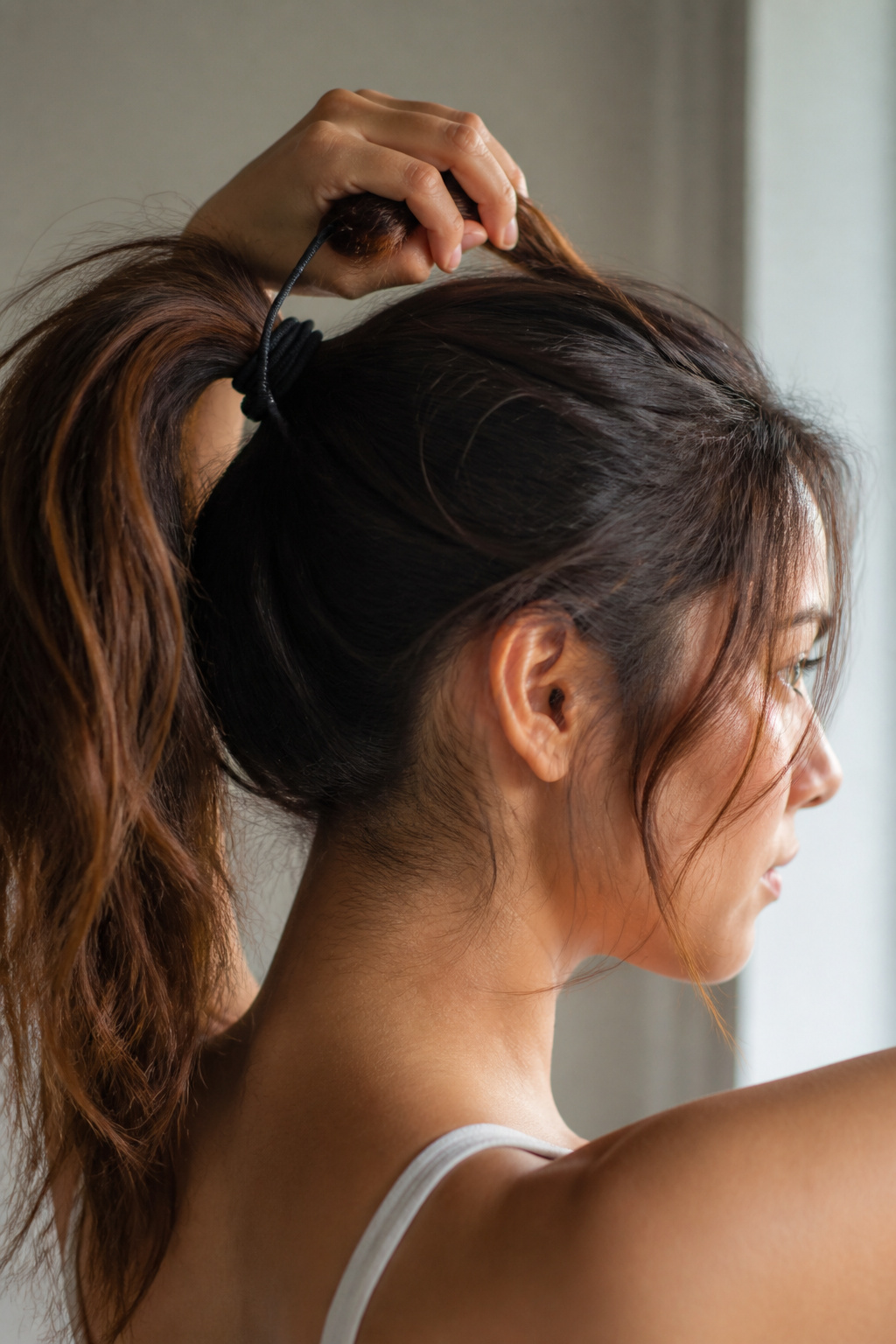

This is where most buns fail during the day. I gather hair at the crown where I want the bun to sit and secure with a hair bungee using two wraps for a firm base. If you prefer a scrunchie, wrap a second elastic around it to tighten the anchor.
Leave two face-framing tendrils out before you secure the ponytail. For a flatter crown, angle the ponytail slightly toward the nape; for height, place it directly on top.
If your curls snag when you pull them through an elastic, stop and switch to a bungee. I learned this the hard way when a tight elastic tore a curl and my bun slipped by lunchtime.
Build the bun and shape for size and hold


Decide the shape first: a compact twisted bun or a loose, voluminous loop. For a textured, secure bun I do this. Twist the ponytail loosely once toward the head, wrap the twist around the base, then anchor with 4 to 6 bobby pins placed under the bun so their ends cross and lock. Pins should enter the scalp at a 45 degree angle and cross under the bun for a better grip.
If you want volume, fan the curl ends outward before pinning and then tug gently at the outer loops to open the shape. For fine hair use a small hair donut inside the loop before you wrap the ends; it gives the circular silhouette without extra product. The mistake I often see is pinning only on top of the bun, which allows it to spin free. Pin underneath.
Finish and detail for a polished, lived-in look
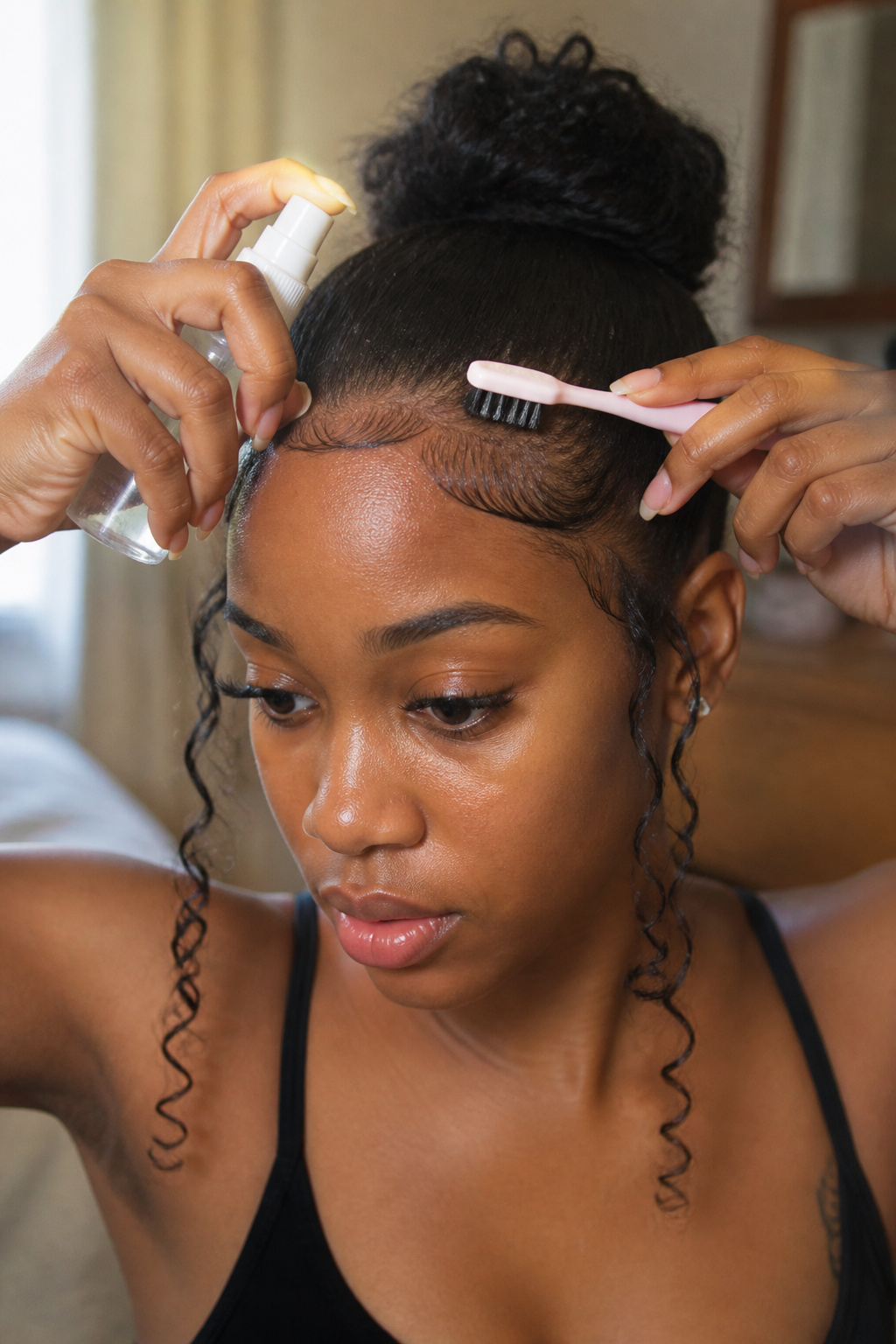

After the bun is anchored, step back and test the hold by bending forward once. If it moves, add two pins at opposing points under the base. For a modern contrast, smooth only the hairline with a pea-sized amount of gel and a soft brush, leaving the bun textured.
Define baby hairs with a light mist from a spray bottle and feather with a small brush or toothbrush. Finish with a light mist of flexible-hold hairspray at arm’s length to avoid crunchy flakes.
If you over-slick the entire head to get a “sleek bun,” the bun will flatten and the curls will lose their bounce. I tried that and my bun looked heavy by midday. Limiting gel to the perimeter preserves texture and longevity.
Common Styling Mistakes to Avoid
Pulling curls through a tight elastic. That tugs, tangles, and weakens curl definition. Use a hair bungee or wrap the elastic around the ponytail gently, or use a scrunchie and an extra elastic for tension.
Pinning on top of the bun only. That allows rotation. Insert bobby pins under the bun and criss-cross them to lock the base.
Over-gelling the whole head. Heavy product flattens volume and makes the bun look plastic. Smooth the hairline only, and keep the bun product-free.
Skipping a firm anchor. A loose first ponytail means the bun will sag. Tighten the base, then loosen the loops to shape the silhouette.
How to Make It Last
By mid-afternoon curls often loosen at the crown and tips may droop. My refresh routine is to mist the roots lightly with water or a curl refresher, shake the bun to restore volume, and add one or two pins under any sagging points.
For day-two wear, sleep with a satin scarf or on a satin pillowcase, or pineapple the bun high and re-scrunch the face-framing pieces in the morning. Avoid brushing once in place; finger shaping keeps curl integrity.
If humidity hits, a touch of flexible-hold hairspray on the bun and a dab of anti-frizz cream on the tendrils will keep the silhouette tidy without stiffness.
What You'll Need for This Look
Heat tools
- Diffuser attachment for hair dryer, universal fit ($15 to $30) — worth the spend if you diffuse often.
- Travel hair dryer, 1875W ($25 to $60) — optional for faster drying.
Styling products
- Alcohol-free volumizing mousse, 8oz ($10 to $20) — apply at roots only.
- Lightweight flexible-hold hairspray, 10oz ($8 to $18) — light finish without crunch.
Care and protection
- Microfiber hair towel, quick dry ($8 to $15) — gentle drying preserves curl pattern.
- Satin hair scarf, 22×22 inches ($6 to $15) — protects overnight.
Accessories and finishing
- Hair bungee tie, pack of 2 ($8 to $15) — prevents tangles when gathering curls.
- Assorted bobby pins, 100 count ($6 to $12) — buy a large pack; you will use them.
- Hair donut, small ($4 to $10) — for fine hair fullness.
- Fine mist spray bottle, 8oz ($5 to $12) — for baby hairs and refreshes.
- Soft bristle edge brush or toothbrush ($3 to $8) — for smoothing delicate edges.
Budget swap: if you do not want to buy a diffuser, rough-dry with a medium-heat dryer and move air across the roots while cupping curls with your hand.
Where to start if you only change one thing
If you do only one change, use a hair bungee for the initial anchor instead of a tight elastic. It saves curls from snagging and makes the ponytail far more secure. Try that and then add pins under the bun if it still moves. What part of this routine would you try first?